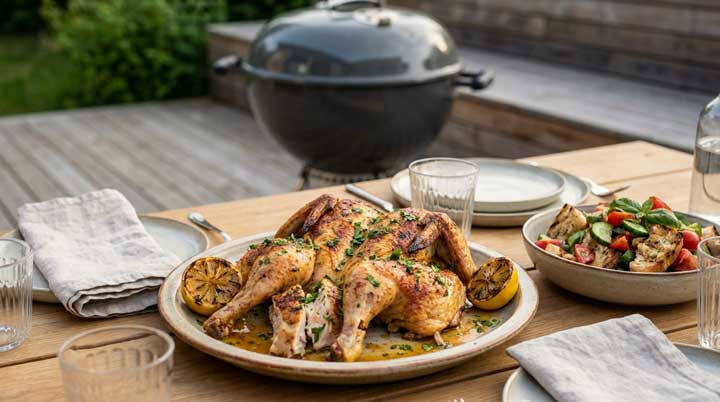

Few things feel as truly summery as a whole chicken over charcoal. At the same time, few things can turn into a small disappointment as quickly if the breast goes dry, the skin comes out pale and the thighs still feel like they need ten more minutes. That is exactly why I love to flatten the chicken and use the spatchcock method when I grill.
You get a bird that lies stable, cooks more evenly and is considerably easier to control than a whole chicken standing upright and behaving like a big warm handbag over the embers. You also get more surface for spices, butter and real grill flavor. It’s one of those methods that feels a bit kitchen-nerdy the first time and completely obvious the second.
Here I do the chicken with garlic butter, herbs and grilled lemon. The flavors are clean, summery and confident enough without taking over. This is not a recipe that hides the bird under a sweet glaze or a heavy marinade. It is a recipe that lets good ingredients, the right heat and a little discipline do the job.
The Recipe in Brief
Servings: 4
Prep time: about 25 minutes
Grilling time: 45–60 minutes
Grilling method: two-zone grilling with mostly indirect heat
Spatchcock chicken simply means you cut out the backbone and press the chicken flat. On the grill that means more even cooking, crispier skin and less stress. The recipe suits charcoal grills, kamados and gas grills with a lid, but I think a classic kettle grill gives exactly that mix of simplicity and charcoal flavor that makes the dish extra enjoyable.
Why You Should Try This Recipe
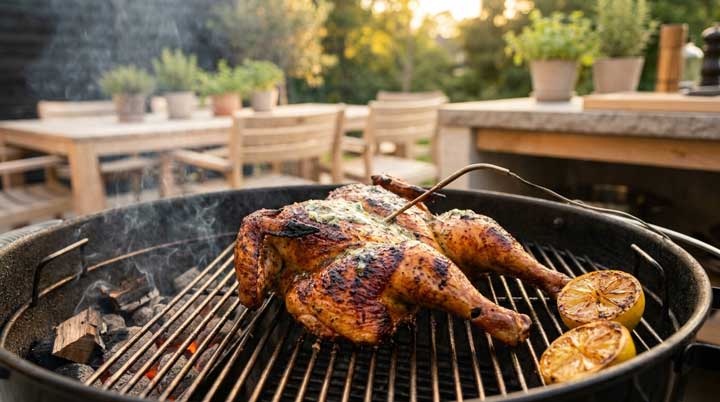
First, it’s a very rewarding recipe if you want to serve something that feels generous without being chained to the grill for five hours. Second, you get a result that actually turns out better from the grill than from the oven. The skin gets to dry out and render, the thighs get a little more heat than the breast and the lemons get a light, bitter caramelization that does a lot for the whole.
It’s also a perfect dish if you want to get more confident with temperature control. You quickly learn how the chicken behaves over indirect heat, when to move it closer to the embers and why resting is just as important as the last brushing of butter. And yes, it looks considerably more impressive on the table than the effort really deserves.
If you want to nerd out more on the skin itself – why it gets tough and how to make it crackle – I have a separate guide on how to get chicken skin crispier on the grill.
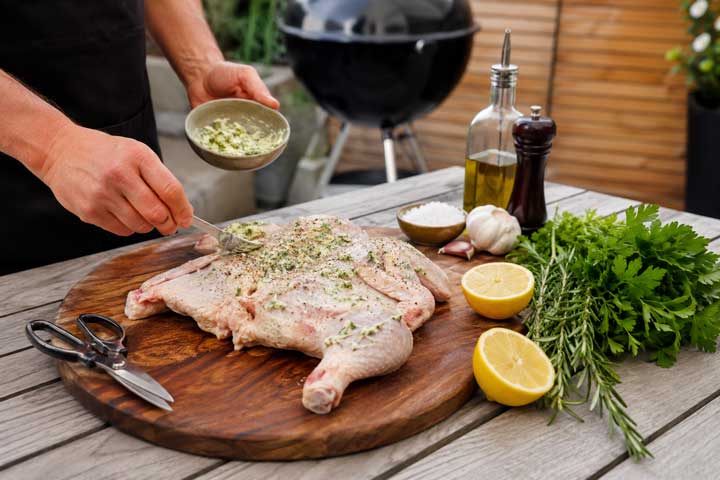
Recipe: Spatchcock Chicken on the Grill With Garlic Butter, Herbs and Grilled Lemon
Ingredients
For the chicken
For the garlic butter
To serve
Instructions
Grilling Method: How to Succeed on the Grill
Two-zone grilling is the whole point here. You want a hot side where you can get color and a calmer side where the chicken can cook through without the skin turning black before the meat is done. On a kettle grill that means charcoal on one side and the chicken on the other. On a gas grill it means one or two burners are lit while the chicken sits away from the strongest heat.
The nice thing about spatchcock is that the thighs and legs, which can take and need more heat, end up a bit closer to the hot zone while the breast is better protected. That gives you less of that eternal struggle between a juicy breast and cooked-through thighs. Feel free to place the chicken with the legs pointing toward the hotter part of the grill if you notice that your grill runs unevenly.
If you need more ideas for summer grill nights, there is plenty of inspiration in the BBQLovers recipe archive.
Temperature, Time and Signs That It’s Done
Count on roughly 45–60 minutes depending on the size of the chicken and how steady the heat is in the grill. Don’t go by color alone. A chicken can look great long before it’s done, and sometimes the other way around. A thermometer isn’t overkill here, it’s just a nicer way to avoid guessing.
The breast is at its best around 158–162°F. The thighs are welcome to go up toward 176°F because dark meat gets better when the connective tissue has time to relax. Clear signs besides temperature are that the thigh moves easily in the joint, the skin feels taut and crisp and the juices run clear rather than pink-tinged.
Which Grill Works Best?
A Weber 57 or another kettle grill is almost ridiculously good for this recipe. You get easy two-zone, a good lid and a fine connection between charcoal flavor and bird. A kamado also works very well and holds the heat steady, but it needs a bit less fuel than many think. On a gas grill the result is still really good, especially if you add a smoker box or a small packet of soaked wood chips in foil.
If you like to build flavor with dry spices, you should also check out 10 BBQ rubs you can easily make yourself at home for more blends that work nicely with poultry.
Serving Suggestions
I think this chicken works best with something that catches the salty butter and the lemon juice. Grilled sourdough bread, a simple bread salad with tomato and olive oil, or roasted new potatoes with a little extra herbs work excellently. If you want a fresher side with a bit of acidity, grilled potato salad with capers, dill and mustard vinaigrette also goes really nicely. If you want to keep it even simpler, grilled romaine, a little Parmesan and a quick dressing of lemon and olive oil go a long way.
The nice thing is that the chicken feels both everyday and festive. It works on a Tuesday when you want to eat well but not make a fuss, and it works when you have people over and want to carry something whole to the table that makes it go quiet for three seconds. That’s a good review in my book.
Björn’s Tips
- Salt the chicken 2–4 hours ahead if you have time. The skin gets drier and the result more even.
- Put a small aluminum pan under the chicken on the indirect side if you want to catch drippings and avoid fat starting to burn unnecessarily.
- If you are short on space on the grill, you can grill the lemons last. They only need a few minutes but do a lot for the whole.
Common Mistakes
- Too wet a chicken: If you don’t dry the skin properly you get tough skin no matter how much charcoal you have.
- Direct heat too early: If you start over the embers you get a dark surface before the meat catches up.
- Too much sugar in the seasoning: A sweet glaze is good, but here it easily burns and hides the butter.
- No rest: If you cut right away, the juices end up on the cutting board instead of in the meat.
Variations and Adaptations
You can swap the rosemary for thyme if you want a slightly milder herbiness. If you want a clearer BBQ feel, you can add 1 tsp ground coriander and a little cayenne to the spice mix. If you are grilling for kids or people who like softer flavors, you can stick to salt, pepper, garlic and lemon and let the grill do the rest.
The recipe also works nicely with corn-fed chicken or a somewhat smaller farm chicken. Just adjust the time, not the temperature. The technique is the same: indirect first, a short direct finish after that, rest at the end.
Why This Recipe Works
This recipe is built on simplifying the physics of the grill instead of fighting it. When the chicken is flattened, the difference in thickness gets smaller and the heat hits the bird more evenly. That in turn means you can work with a slightly higher, cleaner indirect temperature without the breast having time to dry out before the thighs are done.
The garlic butter does two jobs at once. The fat helps the skin take on color and the finely chopped herbs give aroma without you having to marinate so long that the surface gets wet. The lemon provides the acidity that lifts the chicken fat and makes the dish taste lighter than it otherwise would. When you also grill the lemons, the acidity is rounded off with some caramelization, which makes it suit the smoky flavor from the grill better.
Finally, a lot comes down to temperature control. You let the Maillard reaction build flavor at the end instead of chasing hard color from the start. That is why the recipe feels so reliable once you’ve made it a couple of times.
FAQ
What does spatchcock mean?
It means you cut out the backbone and press the chicken flat. It cooks faster and more evenly than a whole chicken in its usual shape.
Can I make the recipe on a gas grill?
Yes. Build an indirect zone by lighting only one side or the outer burners and place the chicken where the heat is calmer.
Do I have to use a thermometer?
No, but I strongly recommend it. It is the easiest way to juicy chicken and safe cooking.
Which smoking wood is best for chicken?
Apple, cherry or a small piece of alder works nicely. You want a mild smoke that supports the bird, not one that runs over it.
Can I prepare the chicken the day before?
Yes. You can cut it open, season lightly and let it sit uncovered in the fridge overnight. Brush on the butter just before grilling.
This is one of those dishes I gladly return to when I want the grilling to feel both relaxed and thought-through. When the skin crackles, the lemon smells a little burnt in just the right way and someone at the table asks for more bread to soak up the butter, you know the evening is on the right track.