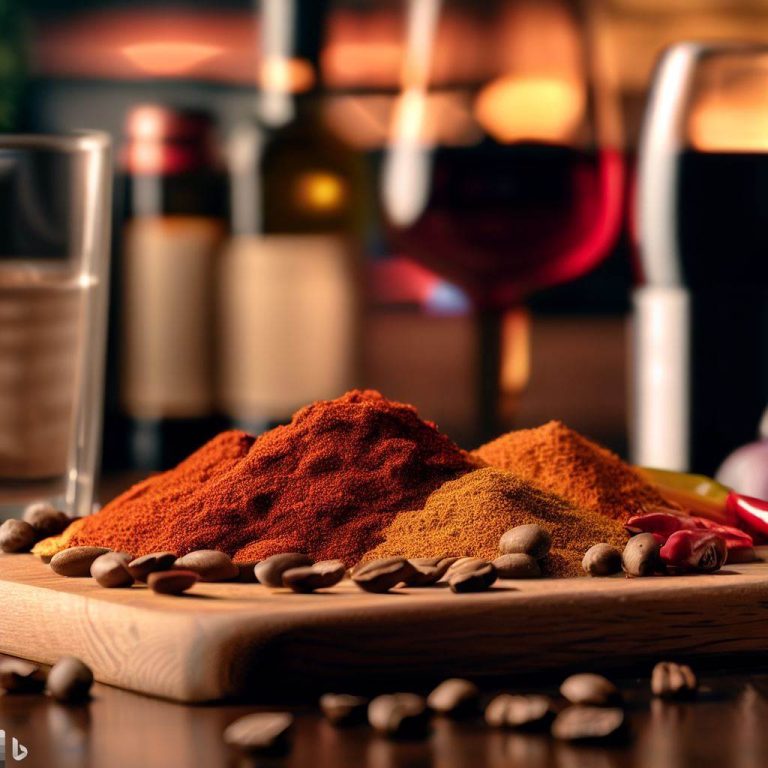
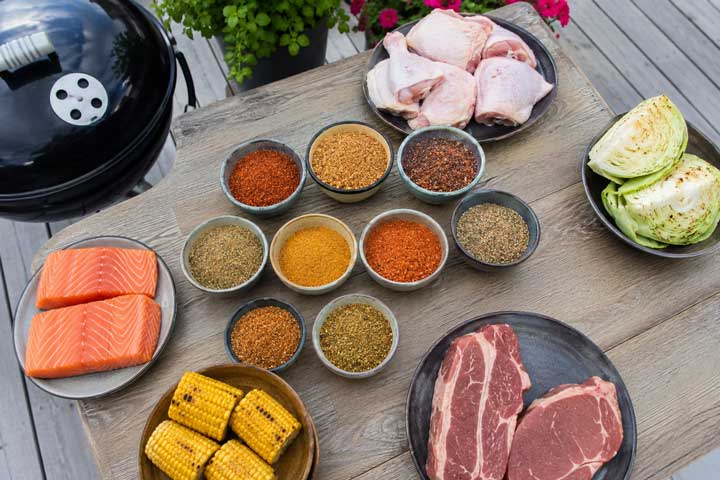

There are few things that give you as much flavor for as little work as a really good rub. I like marinades too, but sometimes you just want to open the spice cabinet, mix up something sensible and get that smell that says now it’s real grilling. The nice thing is that you don’t need to buy expensive ready-made blends to get good results. On the contrary, it’s often tastier, cheaper and more useful when you mix your own.
In this guide I’ve gathered ten rubs that I actually think deserve a place in the pantry. These aren’t ten nearly identical jars of paprika and wishful thinking, but ten blends with different jobs on the grill. Some are givens for ribs and pulled pork, others suit beef, chicken, fish or vegetables better. The idea is simple: you should be able to pick a rub based on what you’re grilling, not just grab the first jar that comes to hand.
A Quick Look at This Guide
Here you get ten homemade BBQ rubs that are easy to mix, easy to understand and made for real use at the grill. I’m working from common Swedish measures and spices that you can get hold of without having to special-order half of Texas. Every rub has clear uses, so you don’t have to guess your way forward when the meat is already on the cutting board.
Why You Should Try Making Your Own Rub
When you mix your own, you can control saltiness, sweetness, heat and smokiness much better. It matters more than you’d think. A rub for ribs can happily have a little more sweetness to build bark and lift the glaze, while a rub for beef can happily be drier, more peppery and a little more straightforward in flavor. A rub for vegetables or fish, in turn, needs a lighter hand.
Another advantage is that you can adapt the rub to the grilling method. If you’re going low and slow over several hours, you don’t always want too much sugar, especially if you know you’ll finish with sauce. If, on the other hand, you’re grilling chicken thighs or sliced pork collar relatively quickly, a little sugar is often exactly what gives nice color and a round flavor.
Ingredients to Keep at Home
If you want to be able to throw rubs together without thinking too much, it’s smart to keep a small base stock at home. I usually use flaky salt or fine sea salt, coarsely ground black pepper, paprika, smoked paprika, brown sugar or muscovado, garlic powder, onion powder, cumin, coriander, oregano, thyme, mustard powder, cayenne and some kind of chili such as ancho or chipotle. Feel free to add coffee, lemon zest and rosemary when you want to give the blends a more distinct personality.
If you have a mortar at home, that’s gold too. Coarsely crushed pepper, coriander or fennel gives a much nicer texture than dust-fine spice in everything.
How to Do It
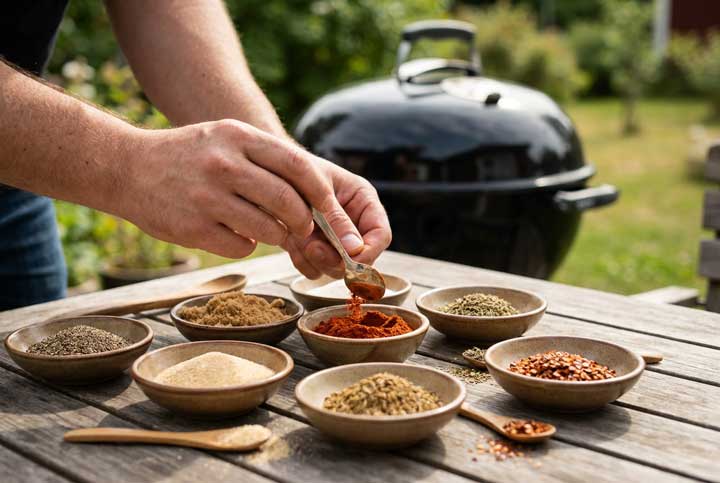
- Measure all the spices into a dry bowl or jar.
- Lightly crush whole spices in a mortar if you want more texture.
- Mix thoroughly so the salt, sugar and spices are evenly distributed.
- Pour into a dry glass jar with a lid.
- Label the jar and preferably use within 2-3 months for the best aroma.
When you use the rub: always dry the raw ingredient first. Then rub in an even layer. For quick grilling, 20–40 minutes is often plenty. On larger pieces for low and slow you can put the rub on a couple of hours ahead, or the evening before if the amount of salt is reasonable.
Top 10 Rubs to Make at Home
1. Classic All-Round Rub
- 4 tbsp paprika powder
- 2 tbsp smoked paprika powder
- 2 tbsp brown sugar
- 1 ½ tbsp flaky salt
- 1 tbsp coarsely ground black pepper
- 2 tsp garlic powder
- 2 tsp onion powder
- 1 tsp cumin
This is the jar I like to keep standing around when I don’t want to complicate things. It suits chicken thighs, pork collar, ribs, burgers and even grilled corn. The flavor is round, classic and clearly BBQ without pulling too hard in any one direction.
2. Memphis-Inspired Rub for Ribs and Pulled Pork
- 3 tbsp paprika powder
- 2 tbsp brown sugar
- 1 tbsp granulated sugar
- 1 tbsp salt
- 2 tsp black pepper
- 2 tsp mustard powder
- 1 tsp garlic powder
- 1 tsp onion powder
- 1 tsp cayenne pepper
Here you get more of a classic American BBQ feel with a little sweetness, a little sting and just the right depth. Perfect for baby back ribs and pork collar for pulled pork. If you’re doing larger cuts of pork, this is a safe start. For more meaty low and slow inspiration you can read Real Pulled Pork.
3. Texas Rub for Beef
- 2 tbsp coarsely ground black pepper
- 1 tbsp flaky salt
- 2 tsp garlic powder
- 1 tsp onion powder
- 1 tsp coarsely ground coriander
Not every rub has to be sweet. For beef I often think it’s best when pepper, salt and a bit of aromatic depth get to do the job. This one sits nicely on ribeye, strip loin, tri-tip and larger pieces that go indirect before getting a hard crust. If you’re partial to that method, Reverse Sear – Gives You the Perfect Cut of Meat is well worth reading on.
4. Coffee and Ancho Rub for Pork
- 2 tbsp brown sugar
- 1 ½ tbsp paprika powder
- 1 tbsp finely ground coffee
- 2 tsp ancho chili
- 1 ½ tsp salt
- 1 tsp cumin
- 1 tsp garlic powder
- 1 tsp black pepper
Coffee in a rub can sound strange the first time, but it does a lot for dark, round tones and a nice surface. This blend likes pork collar, pork belly and thicker chops. Ancho gives depth rather than raw heat, which makes the rub pleasant even if you’re not chasing a fire in your mouth. If you like precisely the combination of coffee and ancho, you’ll find the same dark flavor trail in my beef short ribs with espresso-ancho rub.
5. Chipotle Rub for Chicken
- 2 tbsp light muscovado sugar
- 1 tbsp smoked paprika powder
- 2 tsp chipotle chili
- 2 tsp garlic powder
- 2 tsp onion powder
- 1 ½ tsp salt
- 1 tsp oregano
- 1 tsp ground coriander
This is a rub that makes chicken a lot more fun. Chipotle gives smoky heat, muscovado rounds it off and oregano makes the flavor feel clear without getting heavy. Especially good on drumsticks, boneless thighs and chicken wings over indirect heat with a quick finish over a hot zone. If you want the same smoky chili trail in a whole dish, try boneless chicken thighs with roasted corn salsa and chipotle-lime.
6. Lemon Pepper Rub for Chicken and Fish
- 1 tbsp coarsely ground black pepper
- 2 tsp white pepper
- 2 tsp garlic powder
- 2 tsp onion powder
- 2 tsp dried thyme
- 1 ½ tsp salt
- Finely grated zest of 1 lemon, mixed in just before use
I don’t make this one because it’s the most macho thing in the pantry, but because it’s seriously useful. It sits well on chicken breast, salmon, chicken skewers and shrimp. Mix in the lemon zest just when you’re about to use the rub, otherwise it easily loses its zing in the jar.
7. Cajun Rub With Real Heat
- 2 tbsp paprika powder
- 1 tbsp oregano
- 2 tsp thyme
- 2 tsp garlic powder
- 2 tsp onion powder
- 2 tsp cayenne pepper
- 1 ½ tsp salt
- 1 tsp black pepper
Perfect when you want more punch in the flavor without starting to fiddle with glaze or sauce. Works really well on shrimp, chicken and pork, but also on grilled corn with butter afterwards. If you want to hold back a little on the heat, just lower the cayenne to 1 tsp
8. Mediterranean Rub for Lamb, Chicken and Vegetables
- 1 tbsp dried oregano
- 1 tbsp finely ground rosemary (in a mortar)
- 2 tsp thyme
- 2 tsp garlic powder
- 1 tbsp flaky salt
- 1 tsp black pepper
- 1 tsp fennel seeds, crushed in a mortar
- 1 tsp lemon zest powder, or finely grated lemon zest at the time of use
Everything doesn’t have to taste sweet and smoky to be grilly. This rub is nice on racks of lamb, chicken skewers, zucchini, eggplant and halloumi. Especially good when you want the sides to feel as well thought-out as the meat.
9. Five Spice Rub for Pork and Wings
- 1 ½ tbsp brown sugar
- 1 tbsp black pepper
- 2 tsp garlic powder
- 2 tsp ground ginger
- 1 tsp Chinese five spice
- 1 tsp salt
- 1 tsp chili flakes
This is the rub for when you want a break from the usual. It has sweetness, warmth and a light spicy perfume that suits boneless pork loin, thin ribs and chicken wings surprisingly well. Go easy with it the first time, especially if you’re not used to five spice.
10. Vegetable Rub for Corn, Pointed Cabbage and Potatoes
- 1 tbsp paprika powder
- 2 tsp cumin
- 2 tsp ground coriander
- 2 tsp garlic powder
- 2 tsp onion powder
- 1 ½ tsp salt
- 1 tsp black pepper
- 1 tsp granulated sugar
This one is dead simple but very useful. Toss grilled corn in a little butter and this rub, or sprinkle it over oiled potato wedges before they go indirect on the grill. Also works nicely on pointed cabbage, cauliflower and portobello.
Grilling Method: How to Get It Right on the Grill
Rubs do the most good when the grilling method is right from the start. If you quick-grill thin pieces with a sugar-heavy rub over rock-hard direct heat, there’s a risk that the surface burns before the inside has time to finish. That’s why I like to run two zones: a hot side for color and a calmer side for control. That way you can build a crust without stressing the raw ingredient.
On larger pieces such as pork collar, ribs or pulled pork, indirect heat is almost always the right way. Apply the rub evenly, let it set and build the flavor slowly at a steady temperature. If you want to add smoke, that’s where rub and smoke really start working together. Go for a little less smoke rather than too much, and let the spice blend be the main thread of the flavor.
Which Grill Works Best?
All of these rubs work on a charcoal grill, gas grill, kamado and smoker, but they come into their own in slightly different ways. A Weber 57 or another kettle grill is a real workhorse when you want to run two zones. The gas grill is handy for chicken, fish and vegetables where you want control and speed. The kamado is fantastic when you want to combine even heat with a little smoke and a nice crust. If you do low and slow often, the smoker is still the kingdom where rubs get the most time to build bark and character. If you need a quick refresher on the basics, Light Your Grill the Right Way is a good start.
Serving Suggestions
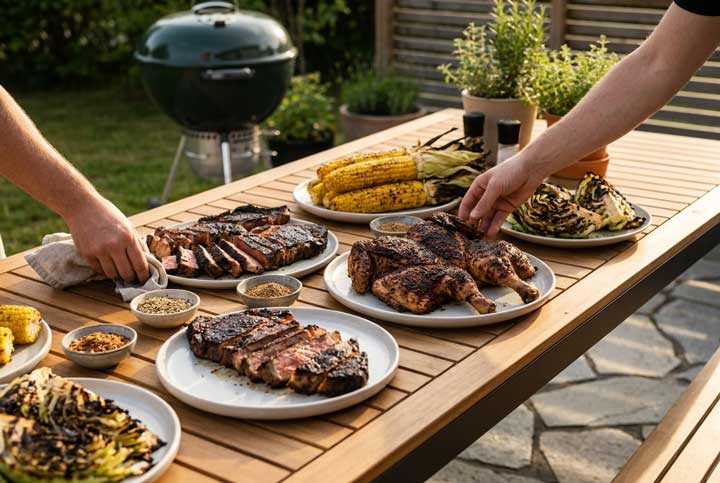
The Memphis rub on ribs with tangy coleslaw and pickled red onion is always right when you want a classic BBQ feel without the food getting heavy in the wrong way. The Texas rub is great on ribeye with grilled new potatoes and a butter with a bit of smoky chili in it. The chipotle rub on chicken thighs goes nicely with grilled corn, lime and a cold yogurt sauce. I like the vegetable rub on pointed cabbage or cauliflower, keeping company with lemon, grated hard cheese and toasted seeds.
Björn’s Tips
- Make small batches the first time. Then you dare to adjust without ending up with half a kilo of wrongly seasoned powder.
- Write the date on the jar. After a few months a lot of it still smells okay, but tastes considerably more tired.
- Don’t always put on more rub just because you can. On fish and vegetables a thinner layer goes a long way.
- If you’re going to brush on a glaze later, cut back a little on the sugar in the rub so the flavor doesn’t end up sticky sweet.
Common Mistakes
- Too much sugar over too high direct heat, which gives a burnt and bitter surface.
- Not drying the raw ingredient before seasoning, so the rub sticks poorly and goes on patchy.
- Too much salt in the rub when the meat is also dry-salted separately.
- Using the same rub for everything without thinking about the ingredient and the grilling method.
- Throwing on rub at the last second and thinking the flavor has time to set right away.
Variations and Adaptations
If you want to make the rubs more kid-friendly, cut back on the chili and let paprika, garlic and a little sweetness dominate. If you want them more low-and-slow friendly, reduce the sugar content somewhat and let pepper, paprika and herbs take more space. For lower-salt versions it works fine to halve the salt in the jar and salt the raw ingredient separately when you grill. If you’re gluten-free or lactose-free, rubs are basically friendly from the start, as long as you keep an eye on any ready-made spice mixes you mix in.
Why This Recipe Works
What makes a good rub good is balance. Salt lifts the flavor and helps the surface behave nicely on the grill. Sugar rounds things off, helps with color and gives a little caramelization, but has to be kept in check if the heat is high. Paprika builds body and color, pepper gives bite, garlic and onion create depth, and spices such as coriander, cumin, rosemary or five spice steer the rub in different directions without you having to rebuild the whole setup.
The rub also works because it meets the fat and heat of the raw ingredient in the right way. Pork likes sweetness and chili. Beef likes pepper and simplicity. Chicken likes aromatic spices but needs a little help from salt and sweetness to feel really generous. Vegetables often need a smaller amount of rub but gain a lot from getting a clear spice profile when the surface takes on color. Add a little smoke when it fits, and you have a very easy path to more BBQ flavor without it getting complicated.
FAQ
How long does homemade rub keep?
In an airtight jar and a dark cupboard it often keeps for several months, but you usually have the best flavor within 2-3 months. Lemon zest and other fresh additions should be mixed in just before use.
Should I salt the meat separately or have salt in the rub?
It depends on the ingredient and the time. On larger pieces I like to dry-salt first and then use a rub with a little less salt. On smaller pieces it often works fine to let the rub do all of the seasoning.
When should I put the rub on?
On thinner pieces, 20–40 minutes is enough. On larger pieces you can go up to a few hours. For pulled pork or ribs the rub can sit longer, but I avoid overdoing the amount of salt if it’s going to sit for a long time.
Can I make a rub without sugar?
Absolutely. Especially for beef and some low and slow cooks, a sugar-free rub can be really good. In that case add a little extra pepper, paprika or herbs to keep the flavor lively.
Which rub is best for beginners?
The classic all-round rub or the chipotle rub for chicken are two very rewarding starts. They are easy to understand, hard to completely mess up, and suit ingredients that many people already grill often.
The nice thing about rubs is that they quickly become personal. After a couple of grilling evenings you know whether you want more pepper, less sugar or a bit more heat. Start with these ten, find your favorites and let the rest of the summer smell of spice jars, warm embers and something that actually feels worth putting on the grill.