
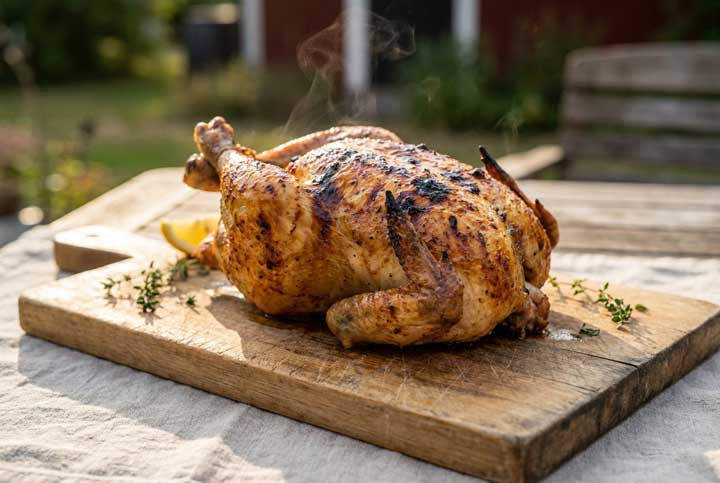

Few things are more annoying than chicken that is cooked through, juicy and fragrant, but the skin still feels limp. It looks right from a distance, but the bite says something else. This article is for exactly that problem.
The goal is not to make the chicken dry or tough. The goal is skin that actually gives a little resistance, a little color and a little roasted flavor without ruining the meat underneath. It is less about magic and more about three fairly down-to-earth things: a drier surface, the right heat and smart timing.
What Makes Chicken Skin Crispy
Crispy skin requires the fat under the skin to have time to render out while the surface dries and takes on color. If the skin is wet from marinade, if the heat is too low or if the chicken is glazed too early, the result is often tough instead of crispy.
That doesn’t mean you have to go flat out directly over the coals from the start. On the contrary, the result is usually better if you first let the chicken cook through in a more controlled way and then finish with higher heat when the skin is ready.
Choose the Right Cut
Chicken thighs, drumsticks, wings and whole chickens with the skin on are best for this goal. Breast with the skin on works too, but there the margin is smaller because the meat dries out faster.
If you want an easy everyday route to a better result, skin-on boneless chicken thigh or ordinary drumsticks are often the most rewarding starting point. If you want to try the same thinking on a whole bird, my spatchcock chicken on the grill is a good place to start. For a quicker recipe where the boneless thigh plays the lead, boneless chicken thighs on the grill with roasted corn salsa and chipotle-lime also fits.
Three Things to Do Before the Chicken Goes on the Grill
1. Dry the Surface Thoroughly
Pat the skin dry with paper towels. Moisture is the enemy if you’re chasing crispness.
2. Salt in Advance
Preferably salt 30–60 minutes before grilling. The salt helps draw out a little surface moisture, which can then dry up again. That gives better conditions for color.
3. Avoid a Sticky Marinade on the Outside at First
Sweet or thick marinades are good for flavor, but bad for early crispness. Put the flavor in the rub instead, or brush on a glaze late in the cook. If you’d like to mix your own, there are 10 BBQ rubs you can easily make at home with several blends that suit chicken.
The Best Grilling Method
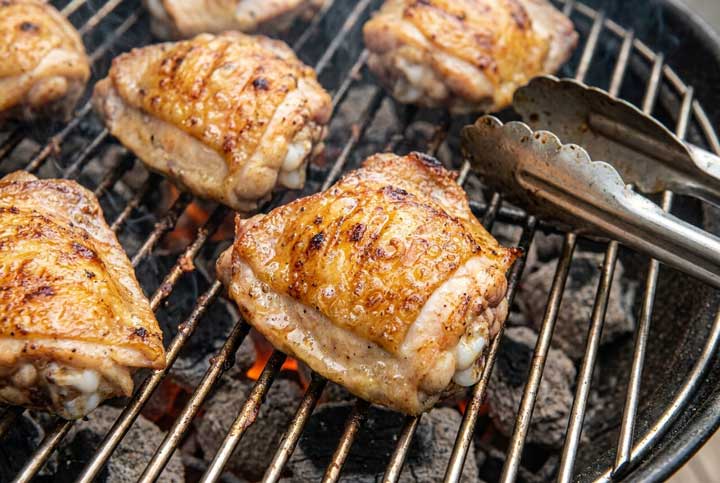
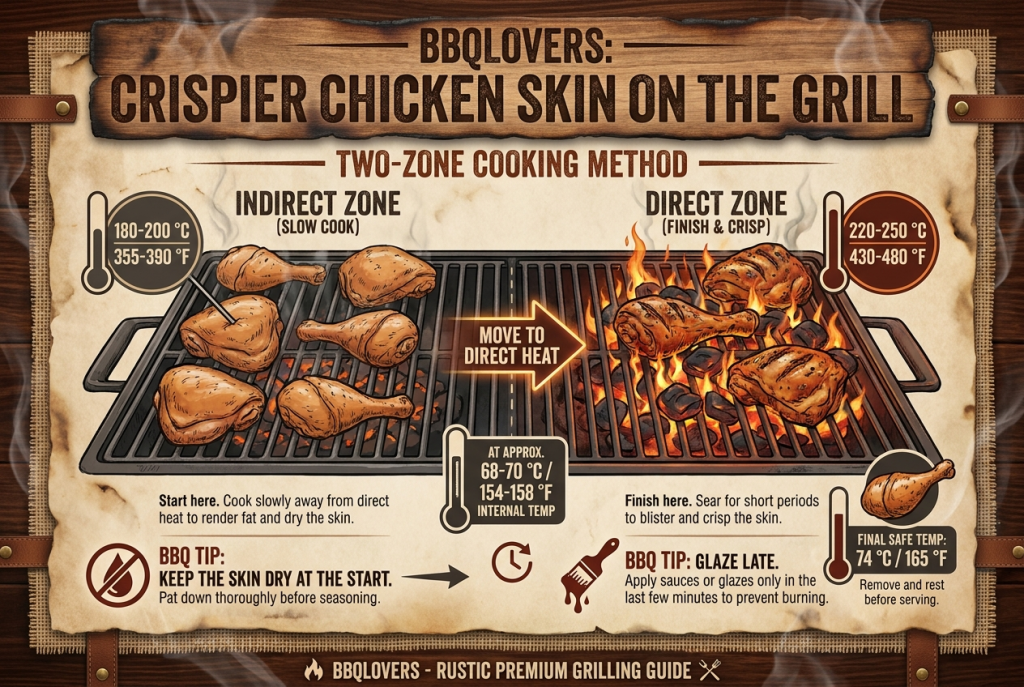
For skin-on chicken, two zones almost always work best. Let the chicken start on indirect heat so the fat under the skin has time to render and the meat comes up evenly in temperature. Then finish over higher direct heat, preferably skin side down, when the skin already looks drier.
- Set up the grill with an indirect zone at around 356–392°F / 355-390 °F.
- Place the chicken skin side up under the lid and let it go until it’s almost done in the middle.
- When the internal temperature approaches 154–158°F / 154-158 °F, move it to direct heat.
- Grill skin side down briefly and in a controlled way over 428–482°F / 430-480 °F until the skin bubbles lightly and takes on clearer color.
- Take it off at about 165°F / 165 °F internal temperature for thighs and drumsticks, or slightly higher if you want more rendered fat in the dark meat.
Temperatures That Help
| Step | Temperature | Comment |
|---|---|---|
| Indirect cooking | 356–392°F / 355-390 °F | even cooking and rendered fat |
| Finishing over direct heat | 428–482°F / 430-480 °F | short finish for color and crispness |
| Move to the direct zone | 154–158°F / 154-158 °F internal temperature | the chicken is almost done |
| Final internal temperature | 165°F / 165 °F | safe and juicy target |
When to Glaze
If you want a sticky BBQ surface, the glaze goes on late. If you brush on sweet sauces too early, the skin turns lacquered rather than crispy, and the risk of burnt spots rises quickly. Wait until the chicken is almost done and put on just a thin layer at the end.
Common Mistakes That Ruin the Skin
- Too much marinade on the outside from the start.
- Grill heat that is too low throughout the cook.
- Turning too often, so the skin never gets time to make contact and take on color.
- Putting the chicken in a dish or on a cold platter right after grilling, so steam makes the surface soft again.
Practical Shortcuts That Actually Work
- Let the chicken air-dry uncovered in the fridge for an hour or so before grilling if you have time.
- Use a light rub instead of a wet marinade at the start.
- Keep the lid closed for most of the indirect phase so the heat works evenly.
- Always finish with your full attention. The last minute makes a bigger difference than the first ten.
Storage and Leftovers
Leftovers keep fine for 2–3 days in the fridge, but the crispness is never quite the same after chilling. If you want to bring the surface back to life, reheat preferably on a grate or in an air fryer/oven.
FAQ
Why does chicken skin get tough on the grill?
Most often because the surface was too moist, the grill heat too low or the glaze was put on too early.
Should the chicken start on direct or indirect heat?
Usually start indirect at 356–392°F / 355-390 °F and then finish with direct heat for better skin.
When should I put on the BBQ sauce?
Put it on late, when the chicken is almost done, otherwise the sauce gets in the way of the crispness.
What internal temperature should chicken have?
A safe guideline is 165°F / 165 °F, especially for thighs, drumsticks and wings.
Does air-drying the chicken in the fridge help?
Yes, a drier surface makes it easier to get color and better skin on the grill.