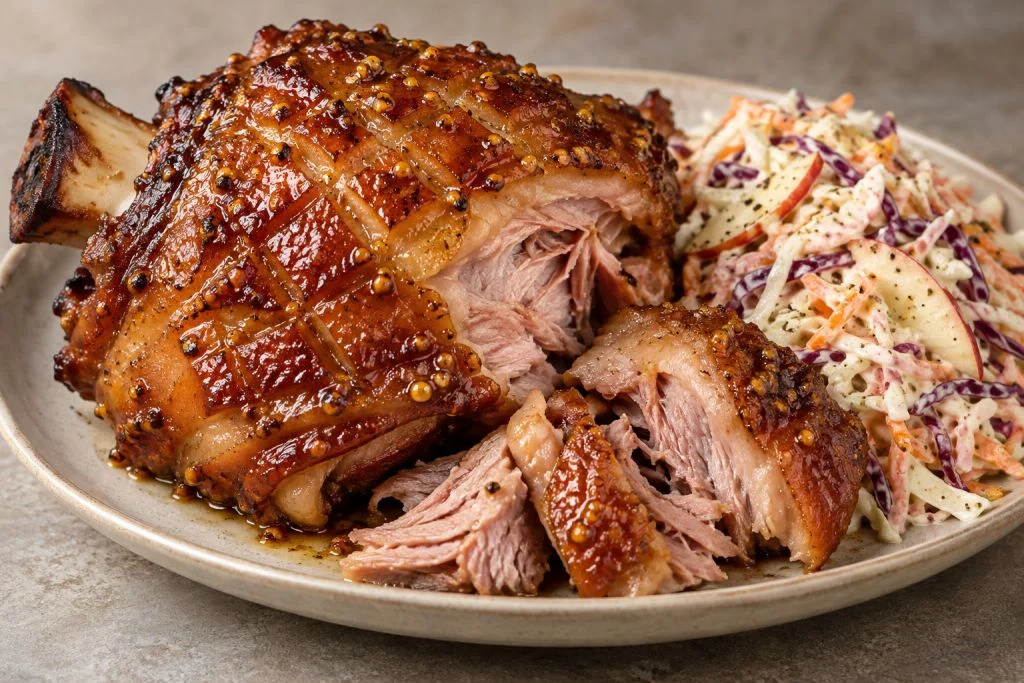

Pork hock (fläsklägg) is one of those cuts many people link with root mash, long braises and a pot simmering away while the kitchen steams up. Nothing wrong with that, I like Swedish home cooking as much as the next hungry person, but pork hock has a wilder side too. Put it on the grill, give it time, add smoke and a mustard glaze that sticks to the rind, and suddenly you have something that feels more BBQ than Sunday stew.
This recipe is built for brined, bone-in pork hock, preferably a piece with plenty of rind and fat. We cook it low and steady over indirect heat, let the smoke do the work and finish with a glaze of coarse mustard, honey and apple cider vinegar. With it I serve a crisp apple slaw that cuts through the saltiness and the fat. It’s hearty, but not heavy in the way that sends you flat on your back afterwards.
If you want to refresh your memory on zones and heat control before you start, BBQLovers’ guide to grilling methods is a good starting point. If you’re doing this on a kettle grill, the walkthrough of the snake method is worth its weight in gold for keeping the heat even for a long time.
The recipe in brief
This is a low and slow recipe where the pork hock is first smoked at about 250–265°F until the meat is tender and the rind has started to take on color. Then it’s brushed with the mustard glaze and carries on until the surface is glossy, sticky and lightly caramelized. The goal is not perfect slices like a Christmas ham, but juicy, smoky meat that can be cut coarsely or pulled off the bone in chunks.
Expect roughly 3 h 30 min–5 h depending on size, how cold the meat is when it goes on the grill and how steadily you hold the temperature. A brined pork hock is already salted, so you don’t need to pile salt into the rub. Here the seasoning is more about pepper, mustard, a little sweetness and smoke.
Why you should try this recipe
First of all: it’s a cheap cut with a big payoff. Pork hock has a lot of connective tissue, rind and fat, which means it’s at its best when you don’t rush it. The grill also does something the pot never can fully do. It dries the surface slightly, builds bark, adds smokiness and creates those little sticky edges that people always happen to pick off the cutting board before the food is even served.
This recipe is also a good fit when you want to serve something that feels different without buying an expensive premium cut. It’s food with character. A bit rustic, a bit Nordic, a bit of American BBQ logic and a whole lot of grill feel.
Recipe: Smoked Pork Hock on the Grill with Mustard Glaze and Apple Slaw
Ingredients
Pork hock
Mustard glaze
Apple slaw
Instructions
Grilling method: how to get it right on the grill
On a Weber 57 or another kettle grill, the snake method is my favorite here. Lay briquettes in a snake along the edge, two briquettes side by side and one on top as the start. Place a foil pan with hot water in the middle. Light 8-10 briquettes and put them at the beginning of the snake. That gives you long, even heat without having to open the lid all the time.
On a kamado you cook indirect with a deflector and small vent openings. On an offset smoker you want clean, thin smoke and a calm flow through the chamber. Whatever grill you use, the key is not to chase the temperature too hard. If you’re between 115 and 275°F, you’re in good shape. Calm stability beats panicking because the grill happens to sit at 260°F instead of 250°F.
When you choose a wood, you can read more in our guide to smoking wood, especially if you’re torn between apple, cherry and hickory. For pork hock I like apple for mild sweetness or cherry for color. Hickory works, but go easy so the smoke doesn’t take over.
Temperature, time and signs that it’s done
- Grill temperature: 250–265°F indirect
- Approximate time: 3 h 30 min–5 h
- First target temperature: 180–185°F before glazing
- Final temperature: about 190–198°F
- Rest: 20 min, loosely covered
The thermometer is important, but feel is at least as important toward the end. When the probe slides in without much resistance and the meat starts to release from the bone, you’re close. A brined pork hock doesn’t behave exactly like pulled pork. It has more rind, different connective tissue and often more salt, so aim for tenderness rather than forcing it to hit a particular number.
Which grill works best?
The kettle grill is perfect because the snake method makes long grilling easy and cheap. A kamado is also excellent if you want stable heat and a juicy environment. An offset smoker gives the most classic BBQ feel, but needs a bit more attention. A gas grill works if you can hold low indirect heat and use a smoker box, but you won’t get quite the same depth of smoke.
Serving suggestions
Serve the pork hock coarsely cut with apple slaw, hearty bread, extra mustard and preferably something sharp and tangy on the side. Pickled cucumber, pickled red onion or little cornichons do a lot for the whole plate. If you want to build a more substantial dinner, grilled new potatoes, roasted cabbage or a platter of grilled root vegetables go nicely.
It’s also ridiculously good in a sandwich the next day. Pull the meat apart, heat it quickly in a pan with a spoonful of glaze and put it in toasted bread with slaw and mustard. The leftovers get almost more personality than the main event.
Björn’s tips
- Always taste the pork hock if you cut off a small piece after cooking. If it’s very salty, keep the slaw extra tangy and unsalted.
- Don’t brush on the glaze too early. The honey can burn before the meat is tender, and then you get a bitter surface instead of that glossy BBQ look.
- Have hot water in the water pan from the start. Cold water steals energy and makes the grill sluggish to stabilize.
- Cut off the rind after cooking if it’s tough. It can be chopped and quickly grilled hard into small crunchy pieces.
Common mistakes
The most common mistake is too much heat. Pork hock needs time for the connective tissue to soften. If you cook it at 356–392°F, the surface is done long before the inside feels nice. Another mistake is salting the rub as if the meat were fresh. Brined pork hock already has plenty of saltiness, so let pepper, mustard and smoke carry the flavor.
Many people also open the lid too often. Every peek costs heat and time. Look when you need to add wood, check the glaze or measure the temperature, not just because nervousness is standing next to the grill clearing its throat.
Variations and adjustments
If you want a more German feel, you can swap the apple slaw for warm sauerkraut and put caraway in the glaze. If you want to go more American, increase the black pepper, add a little ancho chili and serve with pickled red onion. For a milder family version, skip the smoked paprika and use just pepper, onion powder and the mustard glaze.
If you use fresh pork hock instead of brined, you need to salt it properly. Dry-brine with about 1.5 percent salt of the meat weight overnight, wipe it off and then continue as in the recipe.
Why this recipe works
Pork hock has a lot of collagen and fat, which is why low heat over a long time is the right way. When the collagen breaks down, the meat becomes juicier and more yielding. The dry surface from the grill helps the spices stick and gives you Maillard reaction where rind, fat and meat meet the heat. The smoke adds depth, but because the meat is brined you want a milder smoke profile so the saltiness doesn’t feel harsh.
The mustard glaze works because it balances fat with acidity and saltiness. The honey gives gloss and caramelization, the mustard gives bite and the apple cider vinegar lifts everything so the pork hock doesn’t feel heavy. The apple slaw does the same job on the plate: crunch, acidity and fresh sweetness against smoked, salty and fatty meat.
FAQ
Can I use fresh pork hock instead of brined?
Yes, but then you need to salt the meat yourself. Dry-brine overnight with about 15 g salt per kilo of meat and then continue with the rub without extra salt.
Do I have to boil the pork hock first?
No, not in this recipe. The whole point is to let the grill, the smoke and time build flavor. Boiling is faster, but gives less bark and less BBQ feel.
Which smoking wood works best?
Apple and cherry are safe bets. Hickory works if you want more power, but use a little less so the smoke doesn’t turn bitter.
Can I make the recipe on a gas grill?
Yes, cook with low indirect heat and a smoker box or a foil packet of wood chips. Keep the temperature around 250–265°F and keep the lid closed as much as possible.
How do I know the pork hock is tender?
When the thermometer shows about 190–198°F and the probe slides in with a little resistance, it’s done. The meat should start to release from the bone but doesn’t have to fall completely apart.
This may not be the quickest thing you can put on the grill, but it’s exactly the kind of food that makes you stay outside a bit longer than planned. A little smoke in your jacket, a cutting board full of juicy meat and a slaw that saves the balance. Then it’s a pretty good grill day, I think.