
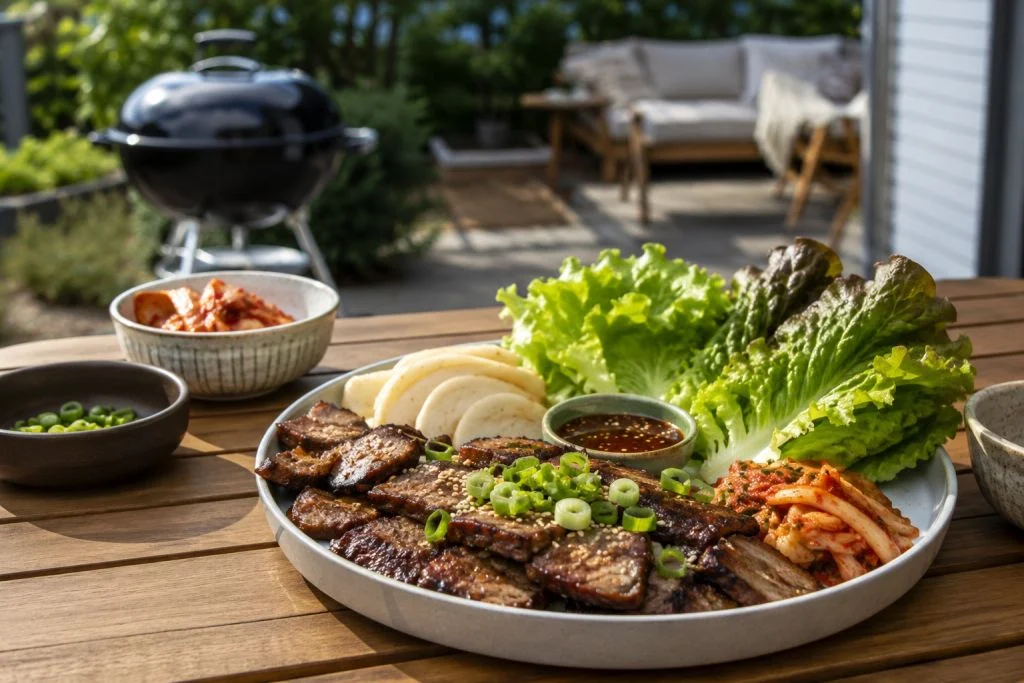

When I want to grill something that goes fast but still tastes like I planned far more than I actually did, I often end up in Korea. Not literally, that would have been nice, but flavor-wise. Thin slices of pork collar, a marinade with gochujang, garlic, soy sauce and sesame, something fresh on the side and preferably lettuce leaves so people can build their own bites. It gets social, sticky, a little smoky and very hard to stop at just one serving.
The nice thing about pork collar is that it already has enough fat to handle hot grilling. Slice it thin and give it the right marinade and you get both a quick dinner and that almost caramelized surface that has people standing there snacking straight from the platter. The pear in this recipe isn’t some odd detail added just to seem fun. It brings juiciness, mild sweetness and a cool crunch that balances the chili heat and the saltiness perfectly.
The Recipe in Brief
This recipe is built on thin slices of pork collar marinated in a Korean-inspired mix of gochujang, soy sauce, garlic, ginger, sesame oil and grated pear. The meat is grilled quickly over high direct heat and then served in lettuce leaves with thinly sliced pear, scallions, toasted sesame seeds and a simple dipping sauce. It’s an everyday-friendly way to get the feeling of Korean BBQ without a tabletop grill and ten little bowls spread across the whole patio.
Why You Should Try This Recipe
You should try this if you like a lot of flavor but don’t feel like turning a whole roast for an hour. Thin slices of pork collar grill fast, get a great crust and are especially good when guests eat in rounds. The flavor profile is also perfect for the Swedish grilling summer, because you get heat, saltiness, sweetness and freshness in the same recipe without it getting heavy.
It’s also a good contrast to more classic BBQ territory like real pulled pork or long guide-type projects like BBQLovers’ big rib guide. Sometimes you actually want to eat tonight and not tomorrow morning.
Recipe: Korean Grilled Pork Slices with Pear, Lettuce Leaves and Sesame
Ingredients
For the meat
For the marinade
For serving
Quick dipping sauce
Instructions
Grilling Method: How to Get It Right
This calls for high direct heat and a short cooking time. It’s the same basic idea as when you grill burgers or thin chops: on fast, off fast, and preferably don’t start moving them around as if you were looking for a parking space. Lay the meat down, let it make contact, flip when you see clear color, done.
On a Weber 57 kettle grill this is almost ridiculously fun, because you get proper glowing coals and quick response. A gas grill works nicely too, especially if you follow a few simple tricks from Maximize the Flavor of Your Gas Grill. The key is to preheat properly. If the grate isn’t hot enough, you risk boiled marinade instead of a grilled crust.
Temperature, Time and Signs That It’s Done
The direct zone should preferably sit around 465–535°F. Thin slices of pork collar don’t need long, usually 2 min–4 min in total depending on thickness. I want the meat just cooked through but still juicy, so an internal temperature around 158–162°F works well here. If your slices are a bit thicker, they may need a few minutes in a cooler zone with the lid on.
The best sign is the color. The surface should be deep reddish-brown and lightly caramelized, but not black and bitter. When the fat edge starts to sizzle and the smell shifts from raw marinade to roasted soy sauce and garlic, you’re very close to done.
Which Grill Works Best?
A charcoal grill gives a bit more bite and a more classic Korean feel, because thinly cut meat loves that real glowing-coal heat. A gas grill, on the other hand, is perfect if you’re cooking a lot in a short time and want to hold an even, high temperature. A kamado works too, but open the vents a bit more than you first think. Thinly sliced meat just gets sad on a half-warm grill.
If you want to brush up on the basics of direct and indirect heat before you get going, there’s plenty of useful stuff to pick up in BBQLovers’ guide to grilling methods.
Serving Suggestions
I like to serve this on a big platter in the middle of the table together with lettuce leaves, pear, kimchi and extra sesame. That way everyone builds their own little wraps. It makes dinner more relaxed and actually tastier, because the meat keeps its heat while people pick what they like. Steamed rice works if you want to make it more filling, but I think lettuce leaves give a better balance.
If you want to build out the evening, you can add something simple from the recipe section on BBQLovers, for example grilled vegetables or some fresh side that holds the flavors together without taking over.
Björn’s Tips
- Ask the butcher counter to slice the pork collar thin if you don’t want to stand at home fiddling with a piece of meat that’s a bit too soft.
- Toasted sesame seeds aren’t just decoration here. They give that nutty finish that makes a big difference.
- Slice the pear thin and late. That way it stays crisp and nice instead of turning tired and soggy.
Common Mistakes
The biggest mistake is slices that are too thick. Then they no longer behave like quick-grilled Korean meat, but like regular pork collar slices with a lot of marinade. Another common error is a grill that isn’t hot enough. Then the meat sticks, the surface turns grayish and you lose that almost sticky caramelization. A third mistake is salting too hard on top of the marinade. The soy sauce already does a lot of the work.
Variations and Adjustments
You can swap the pork collar for thin slices of pork belly if you want it even fattier and more like classic Korean BBQ. If you want it a bit milder, cut back on the gochujang and let the grated pear play a bigger role. For more heat, you can serve extra gochujang on the side instead of cranking up the heat in the marinade and risking that everything tastes the same.
Why This Recipe Works
Pork collar works so well here because the fat handles both high heat and a strong marinade. The grated pear does two things at once: it contributes sweetness that helps the surface get nice color, and it gives a mild enzymatic tenderizing that makes the meat more pliable without turning mushy. Gochujang brings umami, chili and fermented depth, but it needs soy sauce for saltiness, acid for balance and sesame oil for roundness. The lettuce leaves aren’t just a serving trick but also part of the flavor balance. The fresh, juicy crispness makes the grilled pork collar feel lighter, and the pear breaks up fat and heat in every bite. That’s why the dish tastes big but never feels heavy.
FAQ
Can I marinate overnight?
Yes, but I think 2 h–4 h works best for thin slices. Too long makes the surface a little too soft.
What can I use instead of gochujang?
There’s no perfect substitute, but a mix of chili paste, a little miso and a little extra sugar can work passably in an emergency.
Do I need a thermometer when the meat is this thin?
Not always, but the first time it’s smart. Thin meat goes from perfect to overgrilled in no time.
Which pear works best?
A firm pear for serving and a ripe one for the marinade is my favorite combination.
Can I make this on a plancha?
Absolutely. You get a bit more searing surface and less dripping into the fire, but still loads of flavor.
This is the kind of dish that suddenly has people standing around the cutting board instead of at the table. I see that as a good sign. If you have time to plate it nicely, you’ve probably made too small a batch.