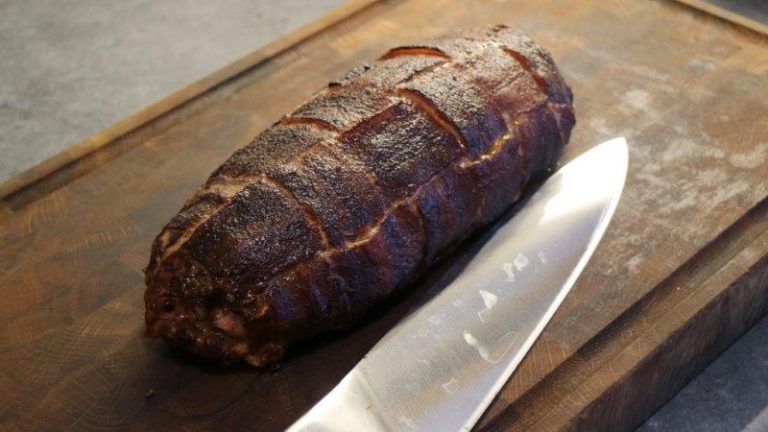
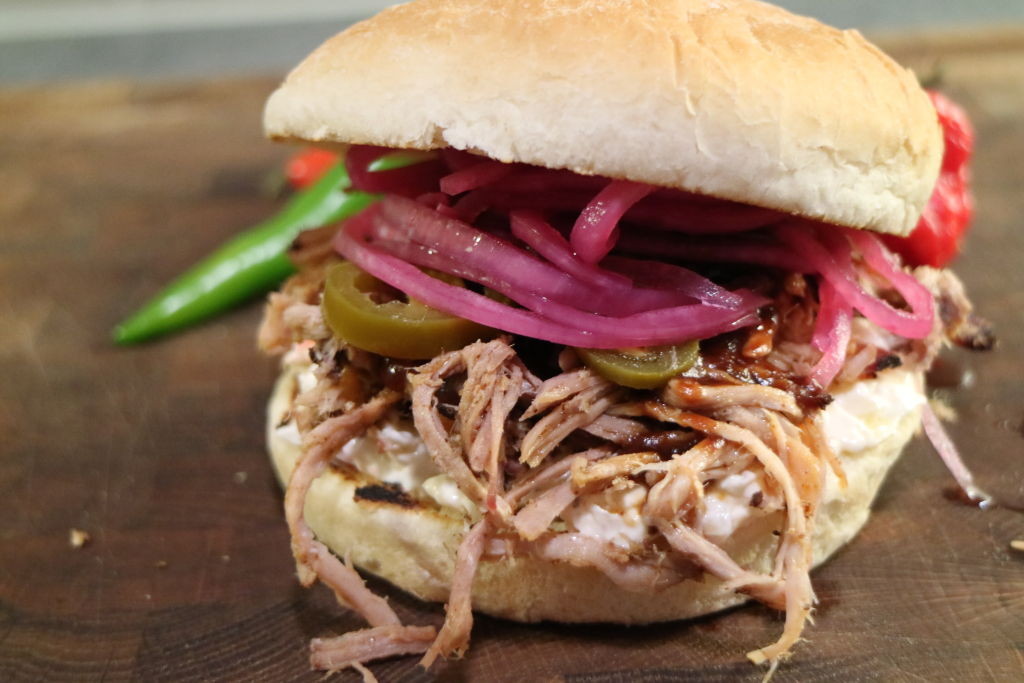

I’ll happily admit that pulled pork is about the best thing I know. Ever since the first time I tried it, I’ve been totally hooked.
I first published this recipe back in 2013, and the basic idea hasn’t really changed since. Sure, you can make pulled pork in the oven just fine – but if you want real pulled pork, it’s the grill or the smoker that counts.
It has to be low and slow. It has to take sooo many hours. And it has to taste of smoke, spices, pork and BBQ.
There are a thousand ways to make pulled pork. This one is mine.
Pulled Pork Quick Facts
- Meat: Pork collar, preferably 4 ½–5 ½ lb
- Grill/smoker temperature: about 230–255°F
- Smoke wood: apple and hickory are still my favorite
- Time: often 10 h–14 h, sometimes longer
- Internal temperature: start checking the meat at around 199°F
- Done: usually around 199–205°F and properly tender
- Rest: about 45 min–1 h
- Most important ingredient: Lots of time
What’s the Best Cut for Pulled Pork?
For me, pork collar is the first choice.
Pork shoulder (picnic) works too, but the collar has good marbling and enough fat to get through many hours at low temperature without drying out.
When meat is cooked slowly, connective tissue and collagen gradually break down. That’s what finally gives you that tender texture where the meat almost falls apart by itself.
So this isn’t the kind of grilling where you stand there with a stopwatch in one hand.
The meat decides when it’s done.

Recipe: Real Pulled Pork
Ingredients
Meat
BBQLovers Rub
Smoke Wood
You can of course use other woods, but the combination of apple and hickory has stuck with me for pulled pork for a long time, and it still works damn well.
Prepare the Meat
Mix all the spices for the rub thoroughly.
Then rub the pork collar generously all over. Don’t be stingy.
I usually like to do this the evening before and let the meat sit covered in the fridge overnight. Then all you have to do is fire up the grill the next morning.
You don’t have to leave a big pork collar out for hours to come up to room temperature. Take it out while you get the grill ready, then get going.
If you want to inject the meat with a little apple juice, that works fine, but it’s absolutely not a must. A good pork collar, the right temperature and enough time go a very long way.
Fire Up the Grill or Smoker
The absolute most important thing is:
LOW TEMPERATURE AND INDIRECT HEAT.
I usually run at about 230–255°F.
If you have a smoker, just stabilize the temperature and go.
If you have a kettle grill, the Minion method or the snake method works perfectly for keeping the heat even over many hours.
A gas grill works too. Cook with indirect heat and use a smoker box or similar if you want to get the smoke flavor in.
Once the temperature is holding steady, you put the meat on.
And then comes the fun part.
Smoking Pulled Pork
I put most of my focus on the smoke during the first few hours, while the surface is still moist and the bark is forming.
As I said, my favorite is apple and hickory.
But I’ve changed my view a bit here compared with when I wrote the original recipe in 2013:
You don’t need to produce a white smoke cloud that has the whole neighborhood calling the fire department.
That said, we’re keeping my old rule:
It should smoke just enough that the neighbors start wondering what you’re up to.
But aim for clean, fine smoke, not thick white smoke that hangs there billowing constantly. Too much bad smoke can give a bitter taste.
Once the bark has a nice color and the meat has enough smoke flavor, there’s no reason to keep throwing in wood just for the sake of it.
The Mop Sauce from Hell
I’ve used this mop sauce for many years. It’s seriously spicy, but when the meat is pulled, the bark mixes with all the milder meat and the result is really good.
If you want less heat, just cut back on the hot sauce and the chili flakes.
For the Mop Sauce
- 1 tbsp hot sauce – pick your favorite
- ¾ cup + 1½ tbsp apple cider vinegar
- ⅓ cup + 1½ tbsp water
- ⅓ cup + 1½ tbsp ketchup
- 1 tbsp freshly ground white pepper
- 1 tbsp freshly ground black pepper
- 2 tbsp salt
- 3 tbsp brown sugar
- ½ tbsp chili flakes
- 2 tbsp of the rub
Mix everything thoroughly.
I used to mop almost once an hour. These days I’m a bit more careful.
First let the rub and the smoke build up a good bark. Once the surface starts to set, you can mop or spritz gently when needed.
Don’t keep opening the grill just because you’re curious.
As the BBQ folks say:
If you're lookin', you ain't cookin'.
When the Temperature Stops: The Stall
Sooner or later it almost always happens.
The meat reaches somewhere around 149–167°F and then it feels like the thermometer has broken.
An hour goes by.
Almost nothing happens.
Two hours go by.
Still almost nothing.
Welcome to the stall.
It’s completely normal. Moisture evaporates from the surface of the meat and cools it while the grill is trying to heat it up.
You have two options here.
Option 1: Wait
My favorite choice when I have plenty of time.
Leave the meat where it is and let the bark keep developing.
Open a beer. Do something else. Let the grill do the work.
Option 2: Wrap
If time starts running away from you, you can wrap the meat in butcher paper or aluminum foil once the bark has the color and texture you want.
That helps the meat get through the stall faster.
Butcher paper tends to preserve the bark better, while foil is faster but softens the bark more.
There’s no right or wrong here.
When I want maximum bark, I like to go without a wrap.
When Is Pulled Pork Done?
The old recipe simply said 203°F.
That’s still a very good guideline, but after many more years at the grill I’d put it like this:
Start probing the meat at around 199°F.
Push the thermometer or a thin probe in at several spots.
When it slides in almost without resistance – a bit like into soft butter – the meat is done.
I often end up somewhere around 199–205°F.
But don’t stare yourself blind at the number.
Two pork collars can weigh the same and still be done at slightly different temperatures.
The temperature tells you when to start checking. The feel tells you when the meat is done.
The Bark
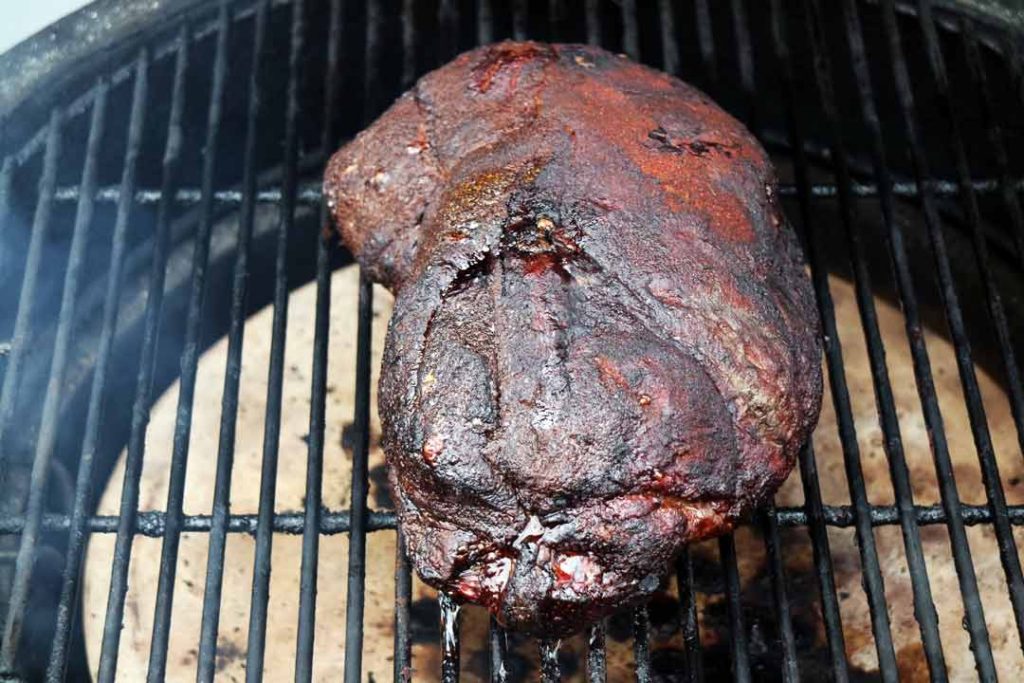
When the meat is finally done, it can look almost coal black.
Don’t panic.
It doesn’t automatically mean you’ve burned dinner to bits.
That’s the bark.
Rub, smoke, fat, protein and many hours of low and slow have built a dark layer of flavor around the meat.
And that’s where a big part of the magic sits.
Let the Meat Rest
Take the meat off and let it rest properly before you start pulling it.
I usually give it about 45 min–1 h.
If you finish earlier than planned, that’s more of a luxury problem. Keep the meat warm and give it a longer rest.
It’s far better than standing there with 25 hungry people in front of the grill while the thermometer still shows 172°F.
Been there.
Pull the Meat
Once the meat has rested, it’s time.
Now you should hardly have to work at all.
Pull the meat apart with your hands, a couple of forks or meat claws.
Remove any larger pieces of fat that haven’t rendered, then mix the bark thoroughly into the meat.
Taste.
If you like, you can add a little of the mop sauce or your favorite BBQ sauce, but don’t drown the meat.
If you’ve done the job right, the pork should taste damn good just as it is.
How I Serve Pulled Pork
The classic is still hard to beat:
Pulled pork + hamburger bun + coleslaw + BBQ sauce.
But you can just as well serve it in:
- tacos
- pita bread
- loaded fries
- baked potatoes
- quesadillas
- pizza
- mac & cheese
- or straight from the pan when nobody’s looking
That last one happens more often than I care to admit.

Pulled Pork FAQ
What’s the best cut for pulled pork?
I prefer pork collar because it’s well marbled and very forgiving over a long cook.
What temperature should the grill hold?
Aim for about 230–255°F and indirect heat.
What internal temperature should pulled pork reach?
Start checking at around 199°F. Most pieces turn out really good somewhere around 199–205°F, but tenderness matters more than an exact temperature.
How long does pulled pork take?
A good-sized pork collar can take 10 h–14 h, sometimes more and sometimes less.
Plan to finish early rather than late.
Do you have to wrap pulled pork?
No.
Wrapping is a tool for getting through the stall faster. Skip the wrap if you have plenty of time and want to maximize the bark.
What’s the best smoke wood?
My old favorite still holds:
Apple + hickory.
Apple gives a mild, slightly sweet smoke, while hickory brings more classic BBQ weight.
More Pulled Pork Recipes