
There are cuts of beef that almost beg for a bit of show around them, and then there’s rostas. It looks fairly modest on the cutting board, but grill it right and you get meat that lands somewhere between Sunday dinner and a reward for grill nerds. I like rostas precisely because it doesn’t try to be something it isn’t. It’s lean, tender and pretty straight-backed. That also means you can’t waste the juiciness with too much heat and too much macho.
Here we use a method that’s easy to trust: generous salting ahead of time, calm indirect grilling to almost the right temperature, and then a quick finish for the crust. Along with that comes a black pepper butter that melts over the slices and a grilled tomato salad that perks up the whole plate. This is a recipe for anyone who wants to grill rostas really well, not just okay.
The recipe in brief
Rostas is one of those cuts that often ends up in the shadow of ribeye, picanha and strip loin, which is a bit of a shame. Give it the right treatment and you get fine beef with a clear beefy flavor, a tender texture and a clean finish that suits the grill very well. It’s at its best when you hold back on over-the-top marinades and instead build flavor with salt, pepper, butter, a little smoke and a proper rest.
This recipe is written for 4 people as a main course. If you have a larger piece of rostas it scales up fine, but then think even more about the thermometer than the clock. Rostas is not a cut to gamble your way through just because the grill feels hot and the evening is nice.
Why you should try this recipe
- You get a complete, clear way to grill rostas without it turning dry.
- The two-zone method makes the recipe easy to get right on a charcoal grill, a kamado and a gas grill.
- The black pepper butter lifts a lean cut without running over the beef flavor.
- Grilled tomato salad brings acidity, sweetness and juiciness that balance the beef.
- The recipe works just as well for a weekend dinner as for a grill night when you want to serve something that feels a bit smarter than standard ribeye.
Recipe: Rostas on the Grill with Black Pepper Butter and Grilled Tomato Salad
Ingredients
For the rostas
For the black pepper butter
For the grilled tomato salad
For serving
Instructions
Grilling method: how to get it right on the grill
This is a textbook example of when two-zone grilling makes life easier. Rostas is too lean to do well lying for long straight over rock-hard heat, but at the same time you absolutely want that appetizing, dark crust before serving. The solution is to let the meat go gently first and then give it a short, hot finale.
On a charcoal grill you put charcoal or briquettes on one side and leave the other side empty. On a kamado it works fine to control things with a deflector or placement, and on a gas grill you light one or two burners and keep one side cooler. A closed lid is no small detail here. The lid is what makes the indirect part stable and even.
If you want to give the meat a little touch of smoke, you can add a small oak wood chunk or a pinch of wood chips at the start of the indirect phase. Just hold back. Rostas doesn’t need a whole cloud of smoke to taste good. A light hint goes a long way when the meat itself is fairly elegant.
If you want an even better handle on when to use direct and indirect heat, have a look at BBQLovers’ rundown of grilling methods before you light the grill.
Temperature, time and signs it’s done
- Grill temperature, indirect: about 285–320°F in the grill
- Final temperature of the indirect phase: 115–120°F
- Target temperature after the final rest: 129–133°F for medium-rare
- Direct finish: very high heat, about 45–60 seconds per side
- Total time on the grill: often 25 min–35 min plus resting
Finished meat should feel springy but not hard, have a clear seared crust and be lightly pink in the middle. If you notice the temperature climbing too fast during the indirect phase, it’s better to take the meat off for a while than to think you can save it later with resting. Resting helps a lot, but not against overcooked meat.
For more reference values for meat and other ingredients, check out BBQLovers’ collected page for temperatures.
Which grill works best?
A kamado is almost ridiculously good for this type of recipe because it holds an even temperature and gives you easy control over both the indirect phase and a really hot finish. A regular kettle grill also works excellently and perhaps gives the most classic feel. A gas grill is absolutely no second choice here, quite the opposite if you want steady everyday control and less fiddling than necessary.
What matters isn’t the grill’s prestige but that you can create two zones and trust your thermometer. If you have that in place, you’re already well ahead of many who think an expensive cut of meat and a high flame automatically mean success.
Serving suggestions
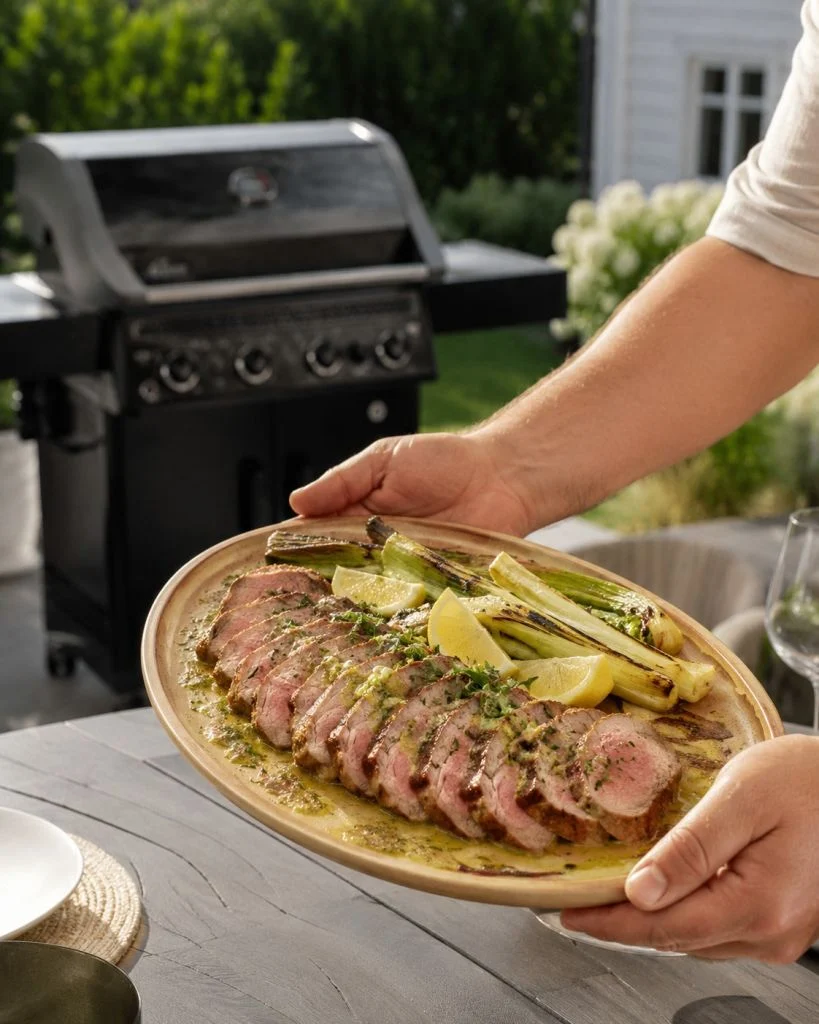
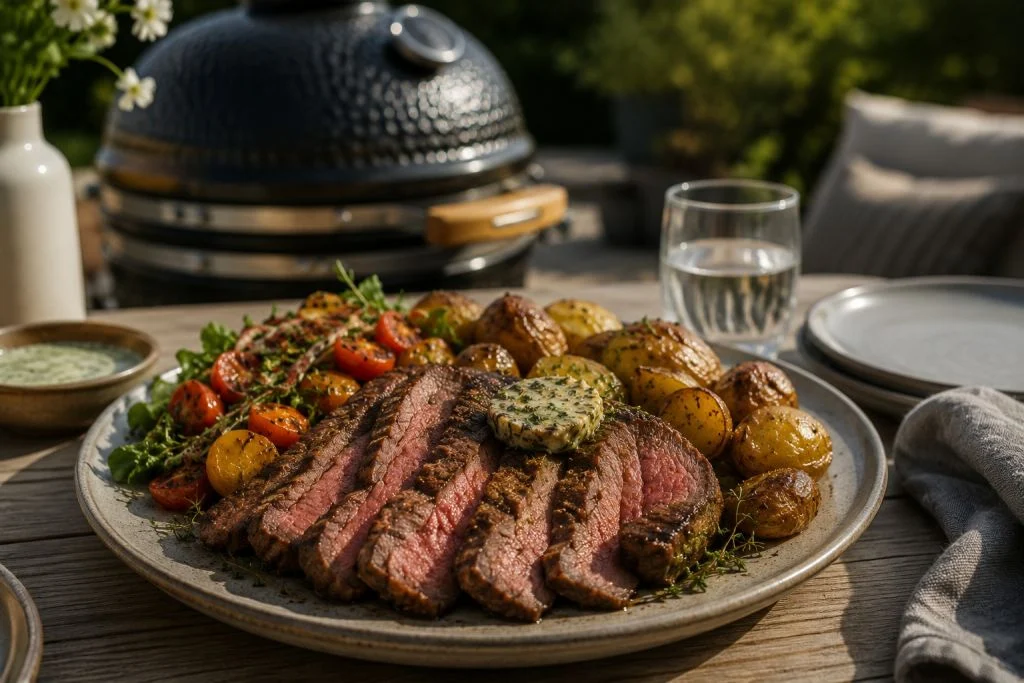
I like to serve the rostas on a larger platter where the meat is sliced at an angle and gets the black pepper butter on top right away. That way the butter starts melting into the slices on the way out to the table, which is exactly as nice as it sounds. Put the tomato salad next to the meat rather than on top, so you keep both the crust and the juiciness of the meat.
The potatoes can either finish cooking in a grill pan with a little extra oil, or be tossed on the grate in a perforated grill basket so they pick up a little smoke and a crispy surface. If you want to build an even heartier plate, grilled romaine or a tangy bean salad also goes very nicely. But here I think the sweetness of the tomatoes and the peppery butteriness do most of the work.
Björn’s tips
- Salting ahead makes a bigger difference than any expensive jar of finishing salt afterwards. Give the meat time.
- Pepper right before grilling or in the butter, not long in advance, so you avoid a peppery crust that just tastes bitter.
- Always slice rostas across the grain. It’s a detail that deserves that respect.
Common mistakes
- Putting the meat directly over rock-hard heat from the start and hoping for the best.
- Grilling by time instead of by temperature.
- Skipping the rest because everyone is already sitting hungry at the table.
- Cutting slices too thick on a cut that does better with thinner carving.
- Drowning the meat in marinade so the rostas’s own flavor disappears.
Variations and adjustments
If you want to make the recipe even simpler, you can skip the tomato salad and just serve the meat with the butter, potatoes and a green salad. You can also swap the black pepper butter for an herb butter with tarragon and lemon zest if you want to go a bit lighter on flavor. If you don’t have rostas, the same setup also works for a smaller roast beef, but then expect a longer indirect time.
For a clearer BBQ feel you can add a small measure of oak smoke at the start and serve with grilled scallions instead of tomatoes. I wouldn’t go all the way to a heavy glaze or sweet BBQ sauce here, though. The rostas is at its best when it still feels like beef first and recipe second.
If you like this kind of controlled beef grilling, BBQLovers’ guide to reverse sear is well worth saving.
Why this recipe works
The most important thing here is the balance between a lean cut and a cooking method that preserves the juices. When the rostas gets to go indirect first, the heat has time to work its way in evenly without the meat juices being stressed out toward the surface. The short direct finish gives you the Maillard reaction, that is, the roasted flavor and the dark crust we want, without the middle going from juicy to gray along the way.
The black pepper butter does several jobs at once. The fat rounds out the relatively lean piece of meat, the pepper brings warmth and depth, the garlic builds background flavor and the herbs keep it from feeling heavy. The tomato salad provides acidity and sweetness, which helps both the butter and the meat feel livelier. It’s exactly this interplay between fat, acidity, crust and rest that makes the recipe feel more complete than just a piece of meat with grill marks.
FAQ
Can I grill rostas directly without an indirect phase?
It works if you slice it into thick steaks, but for a whole piece of rostas the result is usually more even and juicier with an indirect start and a quick finish.
What internal temperature should rostas have?
I think 129–133°F after resting is the best zone. The meat is then medium-rare and juicy without feeling raw.
How long should rostas rest after grilling?
At least 8 min–10 min after the final sear. If you have a larger piece you can give it 12 min without any problem.
Can I prepare the black pepper butter ahead of time?
Yes, preferably the same day or the day before. Take it out a while before serving if you want a softer consistency.
What goes well to drink with it?
A red wine with some backbone works nicely, but a cold lager or an amber ale is actually at least as good with the pepper butter and the grill flavors.
Rostas may not be the cut that shouts loudest at the meat counter, but when it lands right on the grill it feels far smarter than its reputation. And that’s something I always like a little extra.