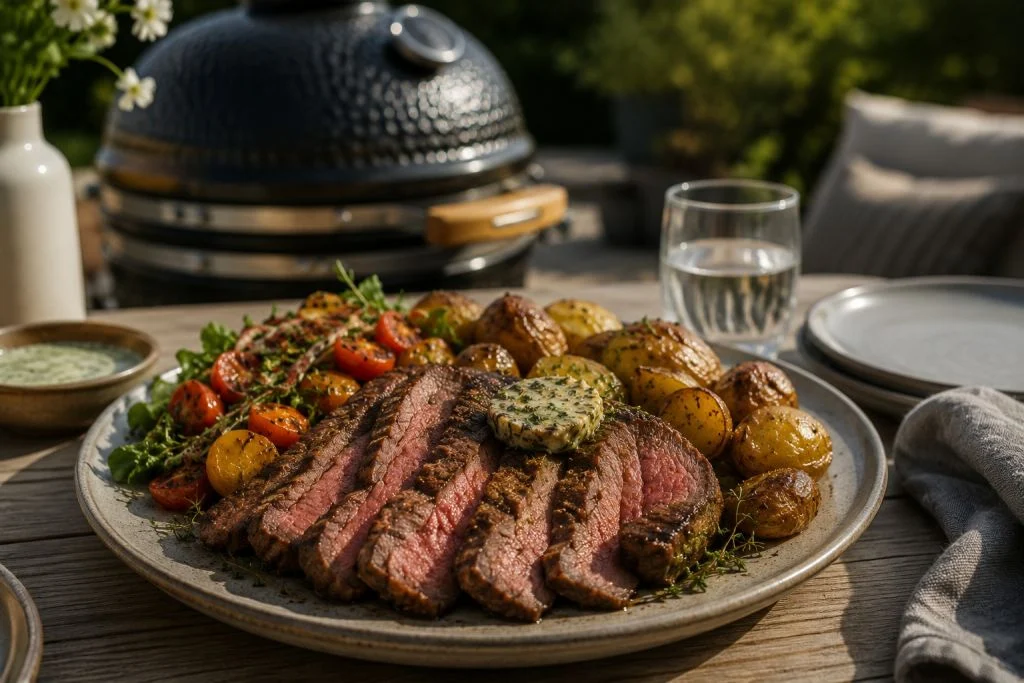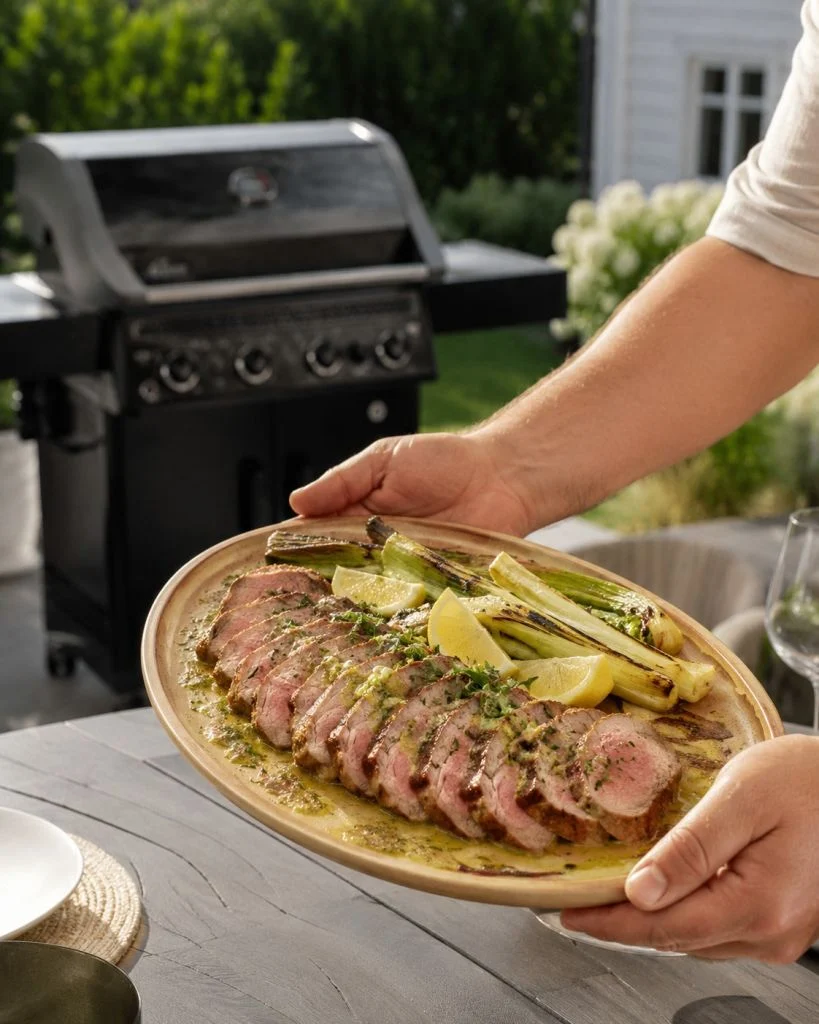
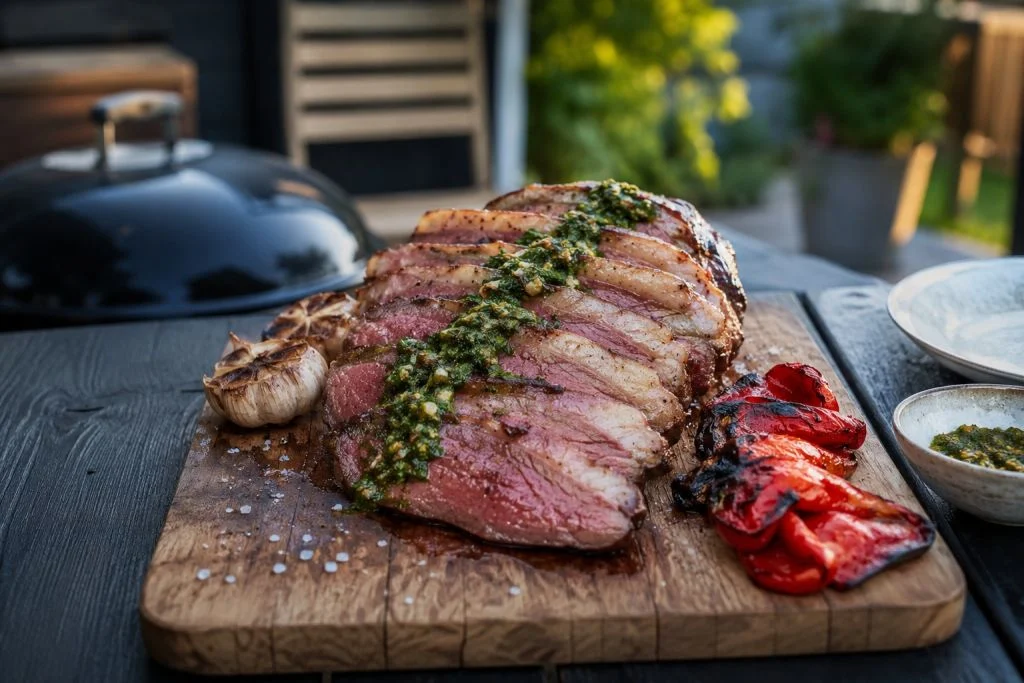

Picanha is the kind of cut that makes me extra happy at the grill. It looks simple on the surface, just meat, fat and salt, but it rewards anyone who takes the time to understand it. The fat cap is not decoration. It is flavor, protection and grill entertainment in one package. Cook it on a rotisserie and you also get even cooking and fat that slowly melts over the meat as it turns. It’s hard to stand next to it and look unmoved.
In this recipe we make rotisserie picanha with coarse salt, roasted garlic in the chimichurri and grilled bell peppers on the side. The flavor profile is South American, but the grilling feel is Swedish patio: glowing coals, tongs, a cutting board and someone saying they’ll just take one more slice. I like to serve picanha in thin slices, preferably straight from the board, with a tangy, herby sauce that cuts through the fat.
The Recipe in Brief
The picanha is cut into thick arcs, threaded onto the rotisserie spit with the fat cap facing out and grilled over indirect, medium-high heat until the internal temperature is around 126–129°F. Then the meat rests briefly and is sliced thin against the grain. The bell peppers go on the grill until the skin chars lightly, and the chimichurri is mixed with roasted garlic for deeper flavor.
- Servings: 4–6 people
- Prep time: 25 min
- Grill time: about 35 min–55 min
- Grill temperature: 355–390°F indirect
- Internal temperature: 126–129°F for medium rare, 133–136°F for medium
Why You Should Try This Recipe
Many Swedish recipes for picanha are good but very short: salt it, grill it, slice it. That works, but it leaves a lot of questions unanswered. Should the fat cap be scored? Should it face up or down? How do you actually cut against the grain once the piece has been divided? Rotisserie solves several problems at once. You get even heat all around the piece, fat that doesn’t just drip away, and a surface that slowly builds flavor without one side taking all the beating.
It’s also a dish that feels festive without requiring a lot of fuss with sauces. The salt and the fat lay the foundation. The chimichurri brings acidity, herbs and a bit of bite. The bell pepper adds sweetness and soft smokiness. Simple, but not sloppy.
Recipe: Rotisserie Picanha with Chimichurri, Roasted Garlic and Grilled Bell Peppers
Ingredients
Picanha
Chimichurri with roasted garlic
Grilled bell peppers
Instructions
Grilling Method: How to Get It Right
Rotisserie requires indirect heat. On a charcoal grill you put the coals on the sides and a drip pan in the middle. On a gas grill you light the outer burners and leave the middle off. On a kamado you use a deflector or arrange the coals so the meat doesn’t rotate directly over a hot spot. The fat cap will drip, and dripping fat over direct coals equals a fire show. A little flame is charming, but a grease fire is not a method.
If you want to read more about the difference between direct and indirect heat, BBQLovers has a walkthrough of grilling methods. And yes, this dish’s cousin is reverse sear. That’s why the recipe for picanha can also be worth a read if you want to cook the whole piece without a rotisserie.
Temperature, Time and Signs That It’s Done
I aim for 126–129°F for medium rare because the temperature rises a degree or so during the rest. If you want it pinker but not red, go to 133–136°F. Thanks to the fat cap, picanha handles medium better than many leaner cuts, but cook it too far and the fibers become pronounced and chewy.
- Rare: about 118–122°F
- Medium rare: 126–129°F
- Medium: 133–136°F
- Rest: 10 min–15 min
- Slicing: thin and consistent, against the grain
Which Grill Works Best?
A Napoleon Rogue or another gas grill with a rotisserie is very convenient here. A Weber 57 with a rotisserie ring gives more classic charcoal flavor and is maybe my favorite for the feel. A kamado works fine if you have a rotisserie insert, but keep an eye on the temperature, because ceramic grills like to run away once they get going.
Serving Suggestions
Keep the serving simple: thin slices of picanha, chimichurri, grilled bell peppers, grilled bread and maybe black beans or a lukewarm potato salad. If you want to go more Swedish, serve it with new potatoes, tomatoes and a bowl of extra herb sauce. The important thing is that the sides have acidity. The fat cap is wonderful, but it needs company that talks back a little.
Björn’s Tips
- Cut the picanha into arcs before it goes on the spit. That makes slicing at serving time much easier.
- Salt properly, but wait with the pepper until after grilling. Burnt pepper on the fat cap can turn bitter.
- Put a drip pan under the meat. It reduces flare-ups and makes the cleanup less soul-crushing.
- Let the chimichurri sit for a while. It should taste lively, not like a freshly chopped stress meeting.
Common Mistakes
- The fat cap ends up facing the middle of the spit: then you miss much of the point of rotisserie picanha.
- Too much heat: the fat burns before the meat has time to finish.
- Wrong slicing: cut with the grain and even good picanha gets tougher than it needs to be.
- Too much chimichurri on the meat right away: serve it on the side instead, so the surface gets to be the star.
Variations and Adjustments
If you want it hotter, you can increase the chili in the chimichurri or stir in a little jalapeño. If you want more smoke, you can put a small chunk of oak or cherry on the coals, but go easy. Picanha doesn’t need to bathe in smoke. You can also swap the bell pepper for grilled corn, a tomato salad or charred scallions.
Why This Recipe Works
Rotisserie makes the heat hit the meat evenly while the fat cap slowly renders. When fat melts and runs over the surface, it helps both flavor and browning. The salt first draws out a little moisture but then has time to dissolve and season the surface more evenly. The indirect heat gives the meat time to come up in temperature without the outside burning.
The chimichurri works as a counterweight. Fat and meaty flavor need acidity, herbs and a little chili so they don’t feel heavy. Roasted garlic adds sweetness and roundness without taking over. Grilled bell pepper reinforces the sweetness of the meat and adds a soft, charred note that ties the whole plate together.
FAQ
Do I need a rotisserie?
No. You can grill the picanha whole with an indirect start and a hot finish, but a rotisserie gives a more even surface and is very rewarding for the fat cap.
Should the fat cap be scored?
If the cap is very thick you can score it shallowly, but don’t cut into the meat. When you make arcs for the rotisserie, it’s often enough to leave the cap whole.
What internal temperature is best for picanha?
I like 126–129°F. For more benchmarks, you can check out BBQLovers’ guide to temperatures.
How do you slice picanha correctly?
First you can divide the raw piece into arcs across the grain. When the meat is done, cut thin slices from each arc so the final slices end up against the grain.
Can I prepare the chimichurri the day before?
Yes, and it often gets better. Just wait to add the lemon until the day you serve it if you want really fresh flavor.
Rotisserie picanha is easy grilling joy with a pretty high payoff. It looks impressive, tastes big and mostly requires that you keep the heat in check. The fat cap, the salt and the spinning do the rest. Sometimes grilling really is this friendly.