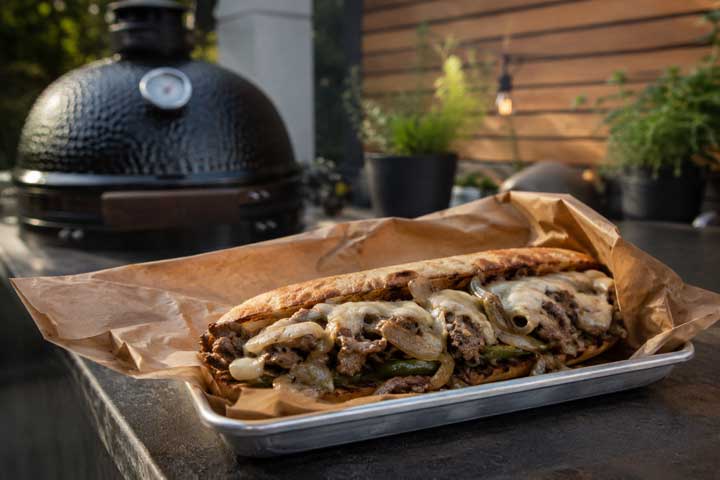

There are sandwiches that are lunch, and then there are sandwiches that make people stand by the grill with a little grease on their fingers saying “just one more half”. A really good Philly cheesesteak lands without a doubt in the second category. Here we make it on the Kamado Joe with a hot griddle, thinly sliced ribeye, slowly softened onions and melted cheese that is allowed to run down into every little crevice. It is street food with a bit of soot at the edges, but still well built enough to feel thought through.
I like this version because it suits the Kamado almost ridiculously well. You get the intense heat, a bit of subtle charcoal flavor and a plancha surface that gives the meat a sear without drying it out. This is not a fussy sandwich to be eaten with knife and fork. It is a hot, juicy and slightly messy meat sandwich that is best straight from the grill.
The recipe in brief
This is a street-food-inspired Philly cheesesteak for 4 people, built for the Kamado Joe and other kamado grills with a griddle or cast iron plate. I use thinly sliced ribeye because it gives the right combination of flavor, fat and tenderness. The onions get really soft, the cheese melts into the meat and the bread is lightly toasted so it holds together without turning hard. The result is juicy, cheesy and pleasantly smoky with clear grill character.
Why you should try this recipe
- You get a real grill version of the Philly cheesesteak instead of a frying pan shortcut.
- The Kamado Joe gives both steady heat and just the right amount of charcoal aroma.
- The recipe is quick enough for a weekend evening but still feels like something you would happily serve friends.
- You can prepare almost everything in advance, which makes serving easy when hunger strikes.
- The flavor sits right between American street food and a Swedish grill night.
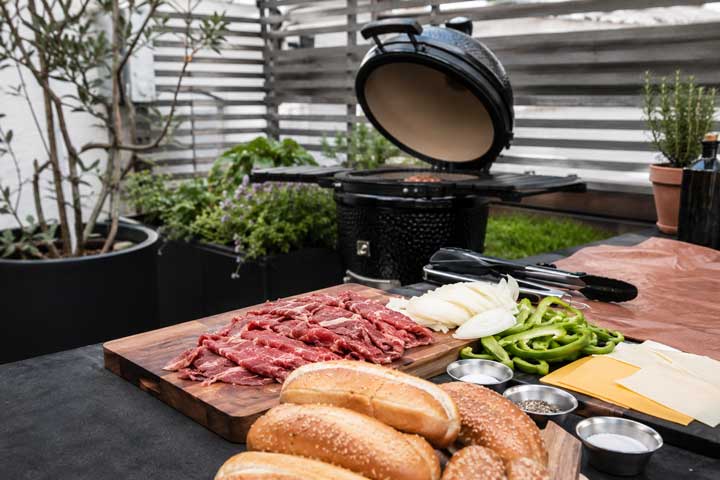
Recipe: Philly Cheesesteak on the Kamado
Ingredients
Makes 4 hearty sandwiches
Optional but good
Instructions
Grilling method: how to get it right on the grill
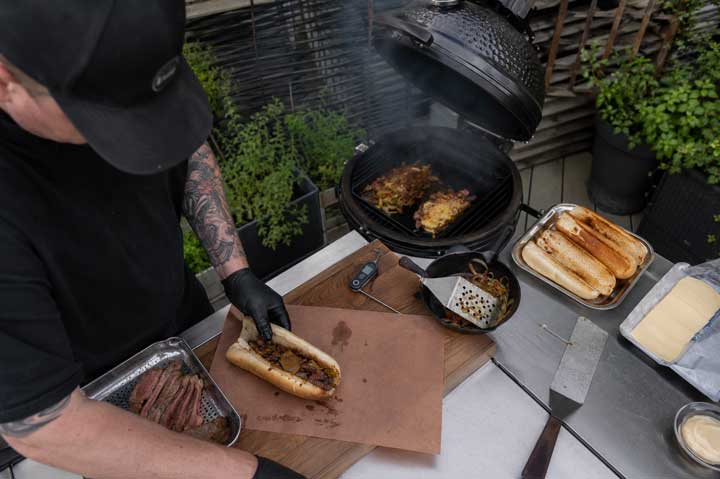
The key here is to think griddle, not grate. On a Kamado you want a hot surface that can give the meat quick color and at the same time carry onions, bell peppers and cheese without anything falling down into the embers. If you have a plancha or a carbon steel-style plate, that is perfect. A large cast iron pan works nicely too.
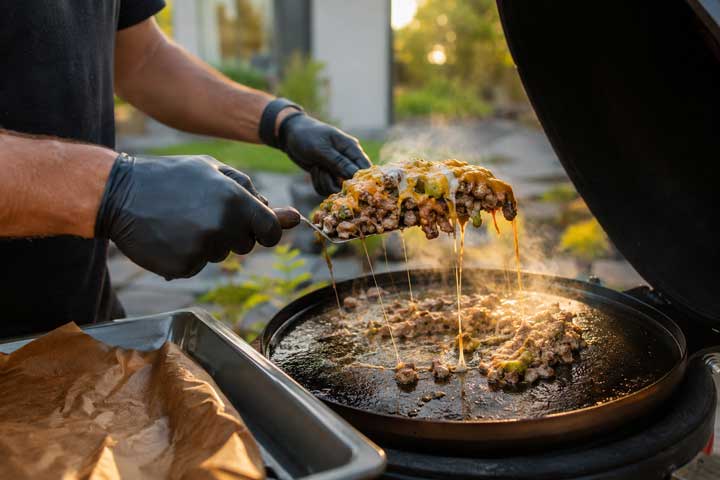
Set up the grill for direct heat and let the cooking surface get properly hot before you start. A Kamado holds heat very efficiently, so do not rush the temperature up too fast. Once the plate is hot, you work in zones: vegetables on one side, meat on the hotter side and a calmer part for melting cheese and keeping the buns warm. If you want a little extra BBQ feel you can add a small piece of oak or hickory early on, but hold back. This should taste like a grilled cheesesteak, not halfway to brisket.
If you want to nerd out more on heat zones and when direct versus indirect heat is smartest, there is a good walkthrough in the BBQLovers guide to grilling methods. If you like this kind of high, direct heat against a flat surface, smash burgers on a plancha are a very natural next recipe.
Temperature, time and signs that it is done
- Grill temperature at the dome: about 430°F
- Griddle temperature: approximately 428°F
- Onions and bell peppers: 8–10 minutes
- Meat: 2 min per batch depending on how thin you sliced it
- Bread: 30-60 seconds on the cut side
It is done when the meat still feels juicy but not raw, the onions are soft and sweet, and the cheese has melted together with the meat instead of sitting like a lid on top. It should be glossy, not dry. If the meat looks gray and boiled, you have put on too much at a time or had too low heat.
Which grill works best?
This recipe is written for the Kamado and it shows. The Kamado is really strong for this kind of food because you get dense, steady heat and a griddle that holds its temperature well even when you pile on lots of ingredients. A regular kettle grill with a plancha can work too, but on a Kamado it is a bit easier to keep the flow nice. You have time to cook vegetables, meat, melt cheese and toast bread without chasing the temperature.
If you have a JoeTisserie, deflector plates or other accessories, you do not need them here. Keep it simple. Hot charcoal, a good cooking surface, two spatulas and a bun that does not fall apart. That goes a long way.
Serving suggestions
I like to serve this sandwich with something that cuts through the richness without stealing the show. A bowl of creamy coleslaw does a lot, especially if you want the meal to feel like a proper BBQ lunch with some bounce from the acidity. The BBQLovers classic the world’s best coleslaw goes very nicely with it.
If you want to pull the sandwich even more toward street food, pickled red onion or pickled jalapeño is spot on. It gives acidity, crunch and a livelier finish in every bite. For those who like classic grill sides, pickled red onion is an easy way to get balance without starting to rebuild the whole recipe.
Björn’s tips
- Slice the meat in advance while it is still slightly half-frozen. That is the difference between thin cheesesteak texture and little steak strips.
- Cook the meat in batches. If everything goes on at once, the plate loses heat and you get more liquid than crust.
- Always toast the bread lightly. An untoasted bun gives up at about the same time as the first bite.
- If you use extra smoking wood, use only a little. Here the smoke should sit in the background like a nice chorus, not as a drum solo.
Common mistakes
- Meat sliced too thick: Then the sandwich feels heavy and clumsy instead of juicy and streety.
- Too much on the plate at once: The heat drops and everything starts to boil instead of sear.
- Too little salt: This is simple food, so the basic seasoning has to be there.
- Wrong bread: An overly hard baguette mostly becomes a jaw workout. Choose a soft bread that still has a little chew.
- Too many bell peppers: The peppers should give sweetness and street feel, but not dominate over meat, onion and cheese.
- Cheese the wrong way: Do not just lay cheese slices in the bun afterward. Melt it directly into the meat and you get the right gooeyness and the right flavor in every bite.
Variations and adjustments
If you want to get even closer to the classic Philly style, you can skip the bell peppers entirely and let onion, meat and cheese do all the work. If you would rather lean harder into modern street food, pickled jalapeño, caramelized onion or a thin chili mayo work very nicely. Provolone gives a more classic melt, while cheddar takes the sandwich a notch more toward comfort food. Personally I like a mix when I cook for Swedish guests, since it gives both punch and recognition.
You can also swap the ribeye for strip loin (New York strip) if you want to bring the price down a bit, but choose a cut with decent marbling. Lean meat is less forgiving at this high heat. Cooking for many? Prepare the onions first, keep them warm at the edge of the plate and cook the meat in quick batches right before serving.
Why this recipe works
What makes a really good Philly cheesesteak is not that it is complicated, but that everything points in the same direction. The fat in the ribeye carries the flavor and keeps the meat juicy despite the quick, hot cooking. The onions contribute sweetness when they get time to soften properly, and it is exactly that sweetness that balances the saltiness from the cheese and seasoning. The bell peppers, if you use them with some restraint, bring in fresh sweetness and a little green note without the sandwich feeling salady.
A lot happens on the surface too. The hot plancha drives the Maillard reaction quickly, which gives the meat that deep, almost nutty seared flavor that makes the whole sandwich feel bigger than the sum of its parts. When the cheese then melts directly into the meat, it binds everything together so that every bite gets the right proportion of juiciness, saltiness and structure. Add a lightly toasted bun that soaks up meat juices and melted cheese without collapsing, and you basically have the whole logic behind why this sandwich turns out so darn good.
The Kamado Joe helps more than you might first think. The charcoal gives a discreet grill flavor, the ceramic body keeps the heat steady and the griddle gives even contact with the ingredients. So you get both a classic seared surface and a light grill signature, which is exactly the little nudge that makes the recipe feel at home at BBQLovers and not just like a quick sandwich moved outside from the kitchen.
FAQ
Which meat is best for Philly cheesesteak on the grill?
Ribeye (entrecôte) is best if you want maximum flavor and juiciness. Strip loin works too, but do not choose meat that is too lean.
Does it have to be provolone?
No, but it melts nicely and gives the right character. Mild cheddar works excellently in Sweden, and a mix of provolone and cheddar is often really good.
Can I prepare anything in advance?
Yes. Slice the meat, mix the sauce and prepare the onions and bell peppers in advance. The actual cooking, however, should be done right before serving.
How do I get really thin meat without a meat slicer?
Put the meat in the freezer for 25–30 minutes so it firms up. Then it is much easier to slice thin with a sharp knife.
Can I make Philly cheesesteak without a plancha?
Yes, a large cast iron pan on the grill works well. What matters is that you get a hot, flat surface that holds its heat.
What goes well on the side?
Coleslaw, pickled red onion, fries or just chips and a cold soda. This is not the dish where you need to complicate things.
When everything comes together, this is one of those sandwiches that disappears faster than you planned. Make it on a Friday night, serve straight from the Kamado and lean back when it goes quiet around the table. That is usually a good sign.