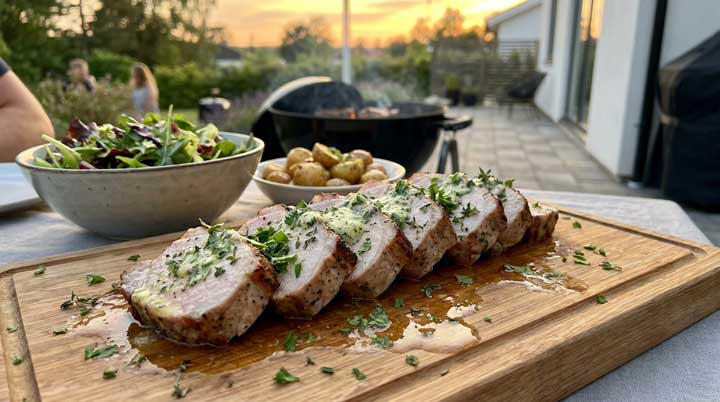
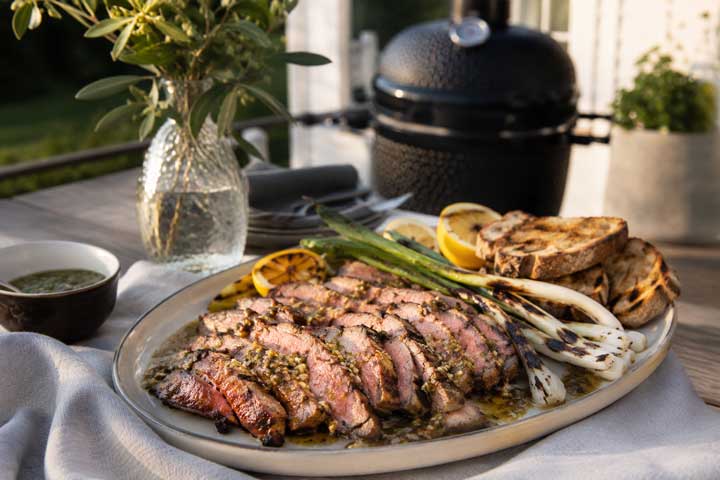

Pluma is one of those cuts that makes people sound very confident at the meat counter. Many have heard the name, fewer have actually grilled it properly. That is a shame, because when pluma is treated right, it is one of the most fun cuts of pork you can put on the grate. Marbled, juicy, quick and with just the right amount of obvious attitude, without demanding half a day of your life.
The nice thing about pluma is that it feels luxurious but behaves simply. You do not need to hide it behind a heavy glaze or sugary BBQ sauce. Quite the opposite. It does best when you help bring out the nutty depth of the fat with a hard crust, a little rest and something tangy to keep it all in check. Today we do that with a sherry vinaigrette, charred scallions and some really clear grilling steps.
If you want to read more about the meat itself before you light the grill, BBQLovers has an article about Iberico pork, and if you want a refresher on the difference between direct and indirect heat, our guide to grilling methods is a good place to start.
The recipe in brief
Here we use pluma, preferably Iberico if you can get hold of it, but regular well-marbled pluma works too. The meat is salted well in advance, gets a proper crust over direct heat and then finishes briefly on indirect heat to a juicy internal temperature. After resting it is sliced thin and served with a warm-and-fresh vinaigrette of sherry vinegar, olive oil, garlic and parsley.
This is a recipe that feels a little Southern European in expression but is still right at home on a Swedish patio. Easy to cook, easy to eat and elegant enough to feel like more than just another piece of grilled pork.
Why you should try this recipe
Because pluma deserves more Swedish grill nights, simply put. Many go straight for pork collar or pork tenderloin when it needs to be quick, but pluma gives both better juiciness and more fun flavor when the raw material is good. It has enough fat to turn luxurious, but not so much that it feels heavy if you handle it right.
I also think this recipe fills a nice gap between everyday grilling and low and slow. It is faster than ribs, has more character than a regular pork chop and is less fiddly than chasing the perfect pork tenderloin. It is also a good recipe for learning to work with two zones: first build the crust, then steer toward the target temperature calmly and under control.
Recipe: Grilled Pluma With Sherry Vinaigrette and Charred Scallions
Ingredients
Serves 4
Sherry vinaigrette
To serve
Instructions
Grilling method: how to get it right on the grill
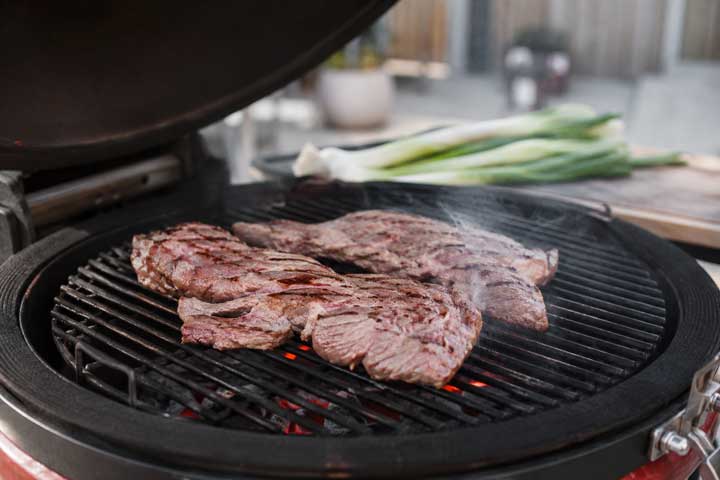
Two-zone grilling is almost ridiculously well suited to pluma. The marbled meat likes hard direct heat to set the crust, but the fat also needs a few extra minutes to soften and become buttery in feel instead of bouncy. You get the best control by first giving the meat color and then letting it finish at gentler heat.
On a black Kamado Joe Classic this is a dream job. You get good stability, good airflow and enough heat for a nice crust without having to chase the grill. A regular charcoal grill works excellently too. A gas grill is fine if you have a clearly hot zone and a cooler side to move the meat to. The important thing is not to try to do everything at maximum heat all the way through.
I also tend to leave the meat alone once it has made contact with the grate. Pluma does not need to be flipped back and forth every thirty seconds. Let the heat do its job first, otherwise you get striped color but not the deeper, even crust that makes such a big difference.
Temperature, time and signs that it is done
Pluma is not like pork tenderloin, where many automatically play it safe and end up with dry meat. Here you gain a lot by staying in the right temperature window. I think 145–149°F is ideal for a juicy, tender pluma where the fat still feels melted and pleasant. If you go well past 154°F, you lose part of the point of this cut.
The time varies with thickness, but count on roughly 5–6 minutes direct and then 6–10 minutes indirect. When the meat is done it should feel springy but not hard. The surface should be a deep golden brown with a few darker patches, and when you cut into the meat the juices should run clear while the slices still look glossy and alive.
Which grill works best?
Kamado and charcoal grills are my favorites here because both handle two zones nicely and give the meat that slightly drier, more distinct surface heat that pluma loves. A matte black Napoleon Rogue gas grill can be really good too if you want to cook quickly, cleanly and in a controlled way on the patio. Then you just need to preheat properly and not be careless with the lid.
An offset smoker is not the first choice for this particular cut. It works, but pluma does not need a long smoke journey to shine. It wants decisive heat and a short rest rather than many hours in the smoke.
Serving suggestions
This meat is happy alongside things that have both texture and acidity. I like roasted baby potatoes with flaky salt, a rustic grilled bread that soaks up the vinaigrette, or a simple tomato salad with good olive oil. If you want to lean more toward grilled sides, grilled pointed cabbage is a really good complement, especially if you want something with a little sweetness and saltiness next to it.
Serve the pluma sliced on a larger platter in the middle of the table. That suits the meat better than hiding everything on plated dishes. People tend to reach for another slice when they notice how quickly it disappears.
Björn’s tips
- Salt in advance but pepper late. That gives you a better crust without the pepper risking turning bitter from burning.
- Always cut across the grain. Pluma is tender, but cut the wrong way it can still feel needlessly chewy.
- Let the vinaigrette meet the meat right before serving, not twenty minutes earlier. That way you keep both the crust and the freshness.
Common mistakes
The most common mistake is to overgrill the pluma until it behaves like a dry chop. Almost as common is getting scared of the fat and trimming away too much before grilling. It is exactly the marbling that makes this cut worth cooking. A third mistake is slicing the meat straight off the grill. Then much of the liquid ends up on the cutting board instead of in your mouth, which feels like a pretty bad trade.
One more thing: do not drown the meat in glaze. Pluma does not need to be hidden. If you have a good piece of meat, the sides should help the meat, not win a shouting contest for attention.
Variations and adjustments
You can swap the sherry vinegar for red wine vinegar if you have to, but sherry gives a rounder and slightly nuttier note that goes very nicely with the pork fat. If you want to go more herby, you can add finely chopped oregano to the vinaigrette. If you want more heat, grate in a little fresh chili or serve with a lightly smoky salsa on the side.
If you are curious about more Iberico details, Iberico pork is a good door into that world. It is easy to get hooked once you start.
Why this recipe works
Pluma works so well on the grill because the cut has high marbling but still a relatively thin, even shape. That means you can build a crust quickly over direct heat while the interior fat has time to melt just enough before the meat loses juiciness. It is exactly the combination of a strong crust and a short indirect finish that gives both texture and control.
The sherry vinaigrette does an important job too. The fat in pluma carries flavor, but without acidity the dish can feel heavy. The vinegar, the lemon and the charred scallions cut through with freshness and a slight bitterness, while the parsley adds a green lift. The result is that the meat feels even juicier, not fattier. That is an important difference. And when you also let the meat rest before slicing, the liquid has time to settle, so every slice turns out glossy and tender instead of wet on the board and dry on the plate.
FAQ
What is pluma, actually?
Pluma is a marbled cut from the front part of the pig, near the neck and the pork loin. It is thin, flavorful and very rewarding on the grill.
Does it have to be Iberico?
No, but Iberico often gives extra depth and marbling. If you find regular pluma of good quality, that works nicely too.
What internal temperature should pluma reach?
Aim for 145–149°F for juicy pluma. If you want it more cooked through, you can go up toward 154°F, but avoid going higher than that.
Can I marinate pluma?
Yes, but keep the marinade simple and avoid too much sugar. This cut does not need to be hidden behind heavy seasoning.
What goes well to drink?
A crisp lager, a light red Rioja or a non-alcoholic option with clear acidity works very well with both the fat and the vinaigrette.
Pluma is a bit like that guest who is not the loudest but still ends up being the talk of the evening. Not because it tries to, but because it simply delivers. And that is actually a rather nice quality, in both meat and people.