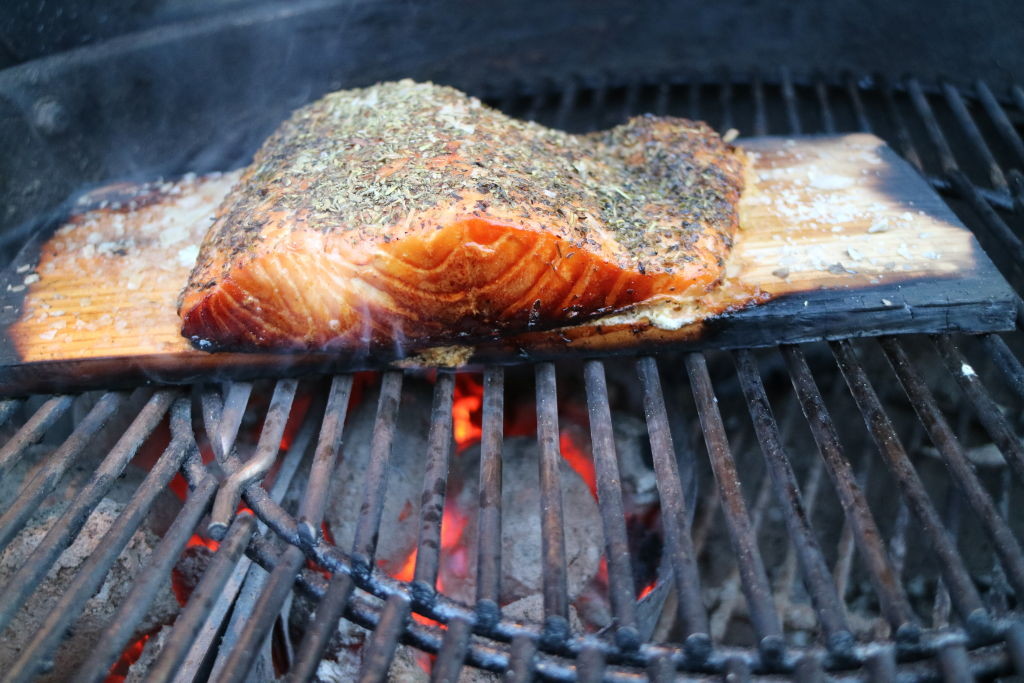

Hot-smoked salmon on the grill is ridiculously easy and turns out really good. This recipe started with a leftover piece of salmon and a nice evening that called for a bit of grill therapy. The combination of alder smoke, dill, lemon, fennel, and mustard turned out so well that the recipe still earns its place here.
The original was written in 2013. I’ve kept the flavors but updated the method: above all, you don’t need to soak the wood chips, and the salmon should be judged by temperature and feel rather than an old fixed 45-minute timer.
Recipe: Hot-Smoked Salmon on the Grill With Alder Smoke, Dill, and Lemon
Ingredients
Prepare the Salmon
Pat the surface of the salmon dry with paper towels. Mix salt, black pepper, fennel, mustard seed, lemon zest, and dill, and spread it over the flesh side.
You don’t need to make the rub unnecessarily heavy. Salmon has a lot of flavor of its own, and the alder smoke should sit as a layer on top — not overpower the fish.
If the salmon still has its skin, I leave it on. It helps hold the fish together during cooking.

Set Up the Grill for Indirect Heat
Build a small indirect zone. On a kettle grill, a simple two-zone setup works nicely: coals on one side and the salmon on the other.
In the original recipe, the grill sat around 210°F. That works, but you don’t need to chase that exact number. A calm, low grill temperature gives you time to build smoke flavor without the surface racing ahead.
If you need a refresher on the setup, see our guide to direct and indirect grilling.
Smoking With Alder: No Need to Soak the Chips
Alder is a classic with fish since its smoke flavor is relatively mild and pairs really well with salmon.
In the old recipe I soaked the alder chips. I don’t do that anymore. Put dry smoking wood on or near the coals and aim for clean, thin smoke instead of big clouds of white smoke.
More smoke isn’t automatically tastier. Fish picks up flavor quite fast, so start gently. If you want to nerd out on the difference between chips, chunks, and different wood types, check out our full guide to smoking wood.
How to Hot-Smoke the Salmon
- Set up the grill for indirect low heat.
- Add a small amount of alder once the coals are stable.
- Place the salmon skin-side down on the indirect side. If you’re using a grill pan or fish tray, brush it lightly with oil.
- Close the lid and let the salmon take on smoke and heat gently.
- Check the internal temperature in the thickest part with a thermometer.
- Take the salmon off once it’s reached the temperature and texture you want.
What Internal Temperature Should Hot-Smoked Salmon Have?
Here it’s important to separate desired juiciness from a simple, conservative safety guideline. Fish can taste juicy and done at lower temperatures, but the USDA states 145°F as the safe minimum internal temperature for fish.
The Swedish Food Agency’s (Livsmedelsverket’s) material also shows that fish is more nuanced than a single magic temperature: temperature and time work together, and Swedish industry guidelines, for example, state roughly 122–140°F for whole fish or fillets depending on the type of fish. According to the Food Agency’s risk-management material, parasites in fish are killed at 131–140°F within one minute, while farmed salmon normally doesn’t need to be frozen for parasite reasons.
For the home cook who wants a simple safety margin, about 145°F in the thickest part is therefore an easy benchmark. If you want to work with a lower temperature for juicier salmon, you need to understand the ingredient, time and temperature, and who you’re serving it to.
Our full temperature guide for fish can help you further.
How Long Does Hot-Smoked Salmon Take?
The original piece took about 45 min at around 210°F in the grill. But don’t treat 45 min as gospel.
The thickness of the salmon, the starting temperature, the grill temperature, and the weather all matter a lot. A thin portion piece can be done far faster than a thick side of salmon. The thermometer beats the clock.
How to Tell When the Salmon Is Done
Besides the temperature, the salmon should start separating into clear flakes when you press it lightly. It should feel juicy, not dried into a dense block of fish.
If you see white protein — albumin — pushed out over the whole surface, the salmon has usually gotten quite a bit of heat. A little is no problem, but a lot is a sign to dial back the pace next time.
Serving
This salmon works warm straight off the grill but is also really good lukewarm or cold. I like to keep the sides simple so the dill, lemon, and alder smoke stay center stage.
Potatoes, a tangy cold sauce, grilled vegetables, or a hearty salad go a long way.
The Short Version
- indirect low heat
- alder as smoking wood
- dry smoking wood — no soaking needed
- smoke gently; salmon picks up flavor quickly
- measure in the thickest part
- go by temperature and texture, not just time
Hot-smoked salmon doesn’t need to be harder than that. Good fish, a bit of alder smoke, and control over the temperature — and you’re set.