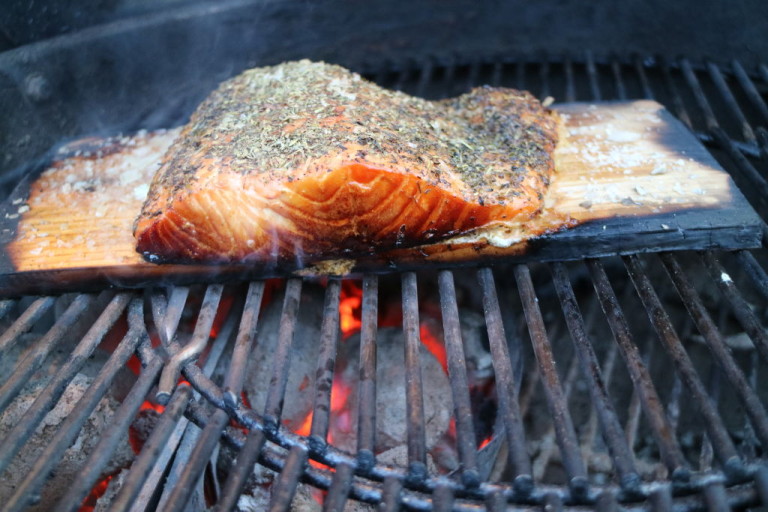


Tuna on the grill is the kind of dish that makes people look a little impressed, even though the cooking itself is quicker than setting the table properly. It is also an ingredient that punishes carelessness right away. Give it too little heat and nothing happens, give it too much time and it turns gray, dry and about as cheerful as a forgotten lunch box.
That is exactly why I like to keep this dish simple. Good fish, high heat, short time and flavors that do not try to play first violin in every bite. Capers and brown butter do a fantastic job here. They give saltiness, nuttiness and depth without hiding the clean flavor of the tuna. Charred lemon pushes everything up another notch and makes the whole thing feel as much grilled as elegant.
This is not a low and slow story. Here we want precision, heat and a bit of confidence. When it comes together, it feels almost ridiculous that something so quick can taste so grown-up.
The recipe in brief
The recipe serves 4 and works best when you can get really nice, thick tuna. Ideally pieces that are at least 1 in thick. Then you get a crust without losing the middle. Brown butter with capers gives both saltiness and a round flavor, while charred lemon makes the dish truly grilled instead of just tart.
If you want to feel more confident about fish over fire in general, the article Fish on the Grill is well worth reading.
Why you should try this recipe
- It is a quick grilled dish that still feels luxurious and thought through.
- You get clear guidelines for heat and time, which is the most important thing with tuna.
- Capers and brown butter lift the fish without the flavors running over it.
- The dish works with simple potatoes as well as a more festive summer dinner.

Recipe: Grilled Tuna With Capers, Brown Butter and Charred Lemon
Ingredients
Nice to serve with
Instructions
Grilling method: how to get it right on the grill
Tuna wants the opposite of pulled pork. Here we work with maximum heat and minimum time. The grate has to be hot, the fish dry on the surface and you should know exactly how you plan to do it before you start. No half-panic, no lid on and off five times and no long marinade dripping down into the embers.
If you need a refresher on the difference between direct and indirect heat, you can quickly freshen up your memory in grilling methods.
I prefer to grill tuna directly over hot coals or a properly preheated gas grill. A clean grill grate is important, otherwise the fish sticks easily. Tuna should almost just be kissed by the heat, not move in.

Temperature, time and signs that it is done
- Grill temperature: as high as possible over direct heat
- Grilling time: 45-90 seconds per side depending on thickness and desired center
- Internal temperature for a pink center: around 90°F
- Rest: about 1 minute
When you want to nerd out over more species, you will find more guideline temperatures in our guide to internal temperatures for fish.
The clearest sign that the tuna is right is the contrast between the seared surface and the juicy middle. If the middle turns grayish-brown all the way through, you have passed the fun part. It is still edible then, but it loses much of its point.
Which grill works best?
Anything that can get really hot works. A kettle grill is superb because the charcoal gives lots of direct heat quickly. A gas grill works nicely too if you preheat properly. A cast iron grate or plancha can give a little extra security if you are worried about the fish sticking, but it goes perfectly well directly on a regular grate if it is clean and hot.
So this is not the recipe where you need a special rig, just a grill that means business for a few minutes.
Serving suggestions
I like to serve the tuna with lukewarm new potatoes, haricots verts and extra charred lemon. It is fresh, grown-up and lets the fish be the main character. If you want to make it even simpler, a crisp salad with thinly sliced fennel and olive oil also works very nicely. With a glass of cold white wine or a good non-alcoholic citrus drink it becomes almost ridiculously summery.
If you want to build more of a grill dinner around it, you can add grilled asparagus, roasted cherry tomatoes or my smoky lemon mayo as a cold alternative to the brown butter. Still, keep the whole thing fairly clean. Tuna does not like it when the plate turns into an ongoing group project.
If you want to go from a quick sear to a calmer method with whole fish, grilled sea bass is a good sister dish to try.
Björn’s tips
- Always pat the tuna dry before grilling. A moist surface gives a worse crust.
- Salt right before grilling, not long before, and you keep the texture better.
- If you have thick pieces, you can grill all four edges for a few seconds for a nicer result.
Common mistakes
- Grilling too long. The most common and most disappointing mistake.
- Too low heat. Then you get neither crust nor a nice center.
- Too much marinade. Tuna does not need to bathe in flavors to taste good.
- Poor raw material. This dish is never better than the fish you start with.
Variations and adjustments
If you want to take the dish in another direction, you can swap the parsley for dill or tarragon, or stir some finely chopped chili into the butter for more heat. If you like an Asian angle, you can swap the Dijon for a little soy sauce and top with toasted sesame, but then you have already moved away from the clean, buttery style that makes this particular version so nice. If you have no capers at home, finely chopped cornichon works in a pinch, but the salty sting of capers is hard to beat.
Why this recipe works
Tuna has a firm, meaty texture and a fairly clean flavor, which makes it perfect for hard grill heat. When the surface quickly gets color through the Maillard reaction, depth and roasted flavor are created, while the short time lets the middle keep its juicy structure. It is exactly the contrast between the charred surface and the rosy center that makes tuna so special on the grill.
Brown butter adds nuttiness and round fullness that tuna likes, but it needs something salty and lively so it does not get heavy. That is where the capers come in. They cut through the butter and lift the fish with their saltiness and slightly tart note. Charred lemon strengthens the grill feel further because it gets a deeper, milder citrus flavor than raw lemon juice.
Technically this is a very simple recipe, but that is exactly why there is nowhere to hide. Good raw material, clean heat, short time and the right finish. When every little detail is right, the result is considerably bigger than the sum of its parts.
FAQ
Can I use frozen tuna?
Yes, if the quality is good and it is thawed gently in the fridge. Pat it extra carefully dry before grilling.
How well done should tuna be?
I like it best with a clearly pink center. Then it is juicy and elegant. Preferably not cooked all the way through.
Does tuna stick easily to the grill?
Yes, if the grate is cold or dirty. Heat and a clean grate make a big difference.
What can I use instead of capers?
Finely chopped cornichon or green olives can work, but the flavor will be different and a little less distinct.
Can I make this in a grill pan?
Yes, absolutely. The principle is the same: really high heat and a very short cooking time.
When you get tuna right on the grill, it feels almost a little like cheating. So little time, so much payoff. But I am not going to apologize for it.